

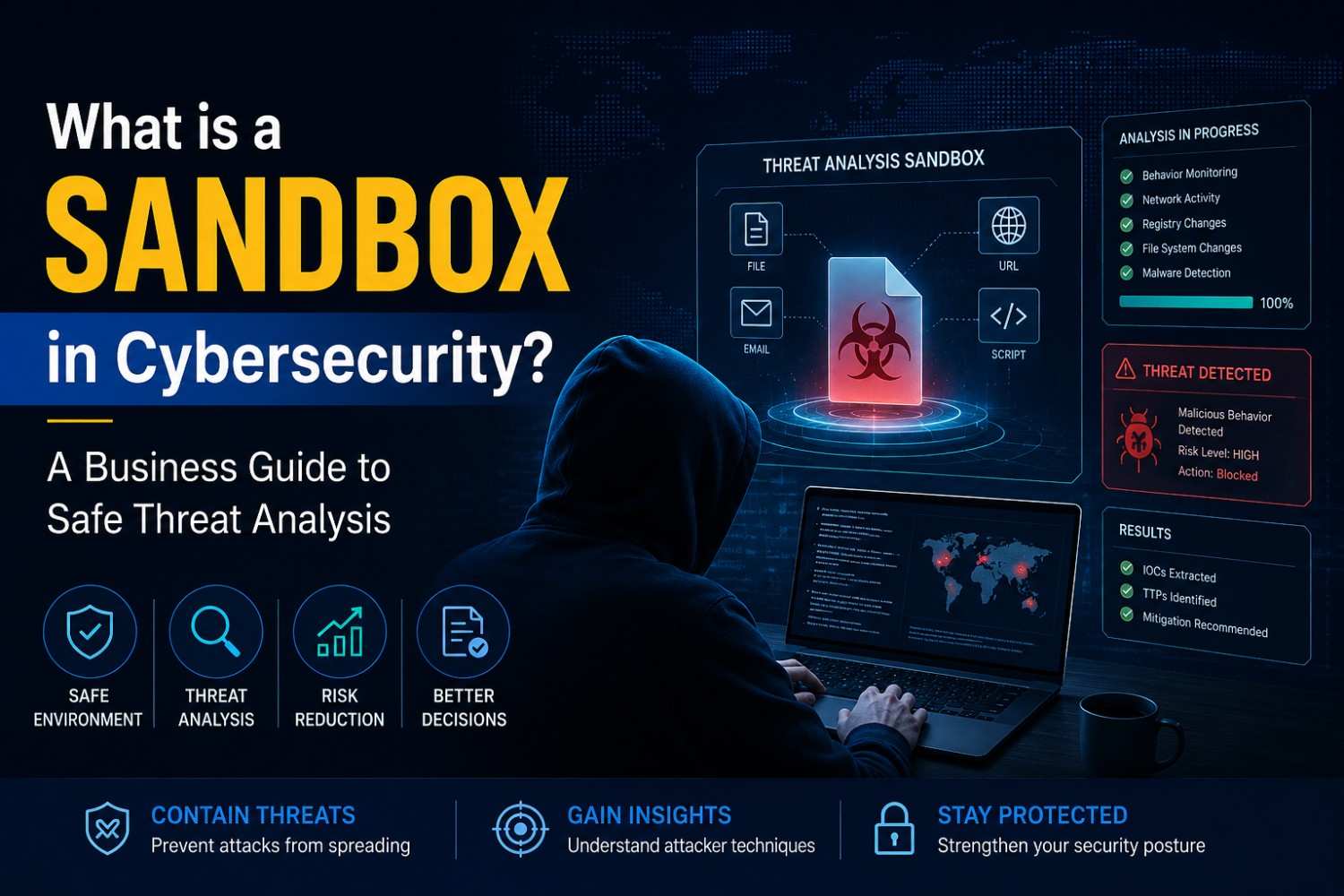

Cyber threats are becoming more sophisticated and difficult to detect. Businesses of all sizes face risks from malware, ransomware, phishing attacks, and other malicious software that can compromise sensitive data, disrupt operations, and cause financial losses.
As attackers continue to develop new techniques, traditional security measures alone may not be enough to identify and stop every threat. To strengthen their defences, cybersecurity professionals use advanced security methods that help detect and analyze suspicious activities before they impact business systems.
One of the most effective techniques is sandboxing. A sandbox in cybersecurity provides a secure, isolated environment where potentially harmful files, applications, or code can be executed and analyzed without affecting the actual network or system.
This technology helps organizations identify threats, understand their behaviour, and prevent damage before it occurs.
What is a Sandbox in Cybersecurity?
A cybersecurity sandbox is an isolated virtual environment designed to safely run suspicious files, programs, or URLs. Since the environment is separated from the organization's production systems, any malicious activity remains contained within the sandbox.
Think of a sandbox as a testing laboratory where cybersecurity teams can observe how a file behaves before allowing it to interact with business systems.
For example, if an employee receives an email attachment that appears suspicious, the attachment can be opened inside a sandbox. If the file contains malware, the malicious actions will occur only within the isolated environment, protecting the actual network from infection.
Why is Sandbox Technology Important for Businesses?
Modern cybercriminals continuously develop advanced malware that can bypass traditional security solutions. Antivirus software relies heavily on known signatures, but many new threats use sophisticated techniques that make detection difficult.
Sandbox technology provides an additional layer of protection by analyzing behavior rather than relying solely on signatures.
Businesses benefit from sandboxing because it helps:
- Detect unknown malware
- Prevent ransomware attacks
- Analyze suspicious email attachments
- Protect sensitive business data
- Reduce cybersecurity risks
- Strengthen threat intelligence
- Improve incident response capabilities
As cyberattacks continue to increase, sandbox environments have become an essential component of modern cybersecurity strategies.
How Does a Cybersecurity Sandbox Work?
The sandboxing process typically follows these steps:
1. Suspicious File Detection
A file, application, script, or URL is identified as potentially risky through email security tools, endpoint protection systems, or manual review.
2. Isolated Execution
The suspicious item is executed within the sandbox environment rather than on a production device.
3. Behavior Monitoring
The sandbox monitors the file's activities, including:
- Network communications
- File modifications
- Registry changes
- Process creation
- System interactions
4. Threat Analysis
Security systems evaluate the behavior and determine whether the file is malicious, suspicious, or safe.
5. Security Action
Based on the results, the organization can block, quarantine, or allow the file while updating security policies accordingly.
Types of Cybersecurity Sandboxes
Different types of cybersecurity sandboxes are designed to meet specific security needs, enabling businesses to safely analyze threats across various environments and applications.
Virtual Machine Sandboxes
These use virtual machines to replicate real operating systems. They provide detailed threat analysis and are commonly used in enterprise security environments.
Cloud-Based Sandboxes
Cloud sandboxes analyze files remotely without consuming local resources. They offer scalability and rapid threat intelligence updates.
Application Sandboxes
Certain applications run within restricted environments that limit access to system resources, reducing the risk of compromise.
Browser Sandboxes
Modern web browsers use sandboxing techniques to isolate web content and prevent malicious websites from affecting the operating system.
Key Benefits of Sandbox Security
Sandbox security offers multiple advantages that strengthen overall cybersecurity protection.
Enhanced Threat Detection
Sandboxing can identify zero-day attacks and previously unknown malware by analyzing behavior patterns.
Improved Data Protection
Businesses can prevent data breaches by stopping malicious files before they reach critical systems.
Reduced Downtime
By detecting threats early, organizations can avoid costly disruptions caused by ransomware and malware outbreaks.
Better Compliance
Many industries require strong cybersecurity controls. Sandbox technology supports compliance with security and data protection regulations.
Faster Incident Response
Security teams can quickly investigate threats and implement remediation measures.
Common Business Use Cases
Businesses use sandboxing across multiple areas to strengthen cybersecurity defenses.
Email Security
Organizations use sandboxes to scan email attachments and links before employees interact with them.
Endpoint Protection
Suspicious files downloaded to employee devices can be analyzed safely before execution.
Software Testing
Developers and IT teams can evaluate software behavior without affecting production systems.
Threat Intelligence
Cybersecurity teams use sandboxing to study malware techniques and improve organizational defenses.
Challenges of Sandbox Technology
While sandboxing offers significant advantages, businesses should understand its limitations.
Some advanced malware can detect when it is running in a sandbox and alter its behavior to avoid detection. Additionally, sandbox solutions may require specialized expertise and resources for effective management.
However, when combined with endpoint security, firewalls, intrusion detection systems, and employee cybersecurity training, sandboxing becomes a powerful defense mechanism.
How Nova Strategic Operations Helps Businesses Strengthen Cybersecurity
As businesses continue their digital transformation journey, cybersecurity can no longer be treated as an afterthought. Organizations need proactive security strategies that protect data, applications, cloud infrastructure, and digital assets.
Nova Strategic Operations (NSO) helps businesses build secure and resilient digital environments through advanced technology solutions and cybersecurity-focused development practices.
NSO specializes in:
- Custom software development
- AI-powered business solutions
- Cloud infrastructure services
- Enterprise application development
- Digital transformation consulting
- Secure technology implementation
By integrating security-first approaches into every project, we help organizations reduce vulnerabilities, improve operational efficiency, and prepare for evolving cyber threats.
Whether businesses are adopting cloud technologies, developing custom applications, or implementing AI-driven systems, NSO provides strategic solutions designed for long-term growth and security.
Conclusion
A sandbox in cybersecurity is an isolated environment used to safely analyze suspicious files, applications, and code without impacting business systems. It plays a critical role in detecting malware, preventing cyberattacks, and improving overall security posture.
As cyber threats become increasingly sophisticated, businesses need advanced protection mechanisms that go beyond traditional antivirus solutions. Sandbox technology offers valuable threat visibility and helps organizations proactively defend against emerging risks.
Partnering with experienced technology providers such as Nova Strategic Operations enables businesses to implement secure digital solutions while maintaining operational efficiency and resilience in today's evolving threat landscape.
Frequently Asked Questions
1. What is the primary purpose of a sandbox in cybersecurity?
The primary purpose of a cybersecurity sandbox is to safely execute and analyze suspicious files, applications, or code in an isolated environment without affecting the actual system or network.
2. How does sandboxing help prevent malware attacks?
Sandboxing allows security teams to observe how a file behaves before it reaches production systems. If malicious activity is detected, the file can be blocked or quarantined.
3. Can sandbox technology detect zero-day threats?
Yes. Since sandboxing focuses on behavioral analysis rather than known signatures, it can often identify previously unknown or zero-day threats.
4. Is sandboxing suitable for small businesses?
Absolutely. Businesses of all sizes can benefit from sandbox technology, especially those handling sensitive customer, financial, or operational data.
5. What is the difference between a sandbox and antivirus software?
Antivirus software primarily detects known threats using signatures, while sandboxing analyzes file behavior in an isolated environment to identify both known and unknown threats.
6. Can sandbox technology stop ransomware?
Sandbox solutions can help detect ransomware behavior before the malware reaches production systems, significantly reducing the risk of infection and data loss.
7. Why should businesses invest in advanced cybersecurity solutions?
Advanced cybersecurity solutions help protect business data, maintain customer trust, ensure regulatory compliance, reduce downtime, and minimize financial losses caused by cyberattacks.







.png)











.png)

.png)
.png)
.png)
_(1).png)
.png)