

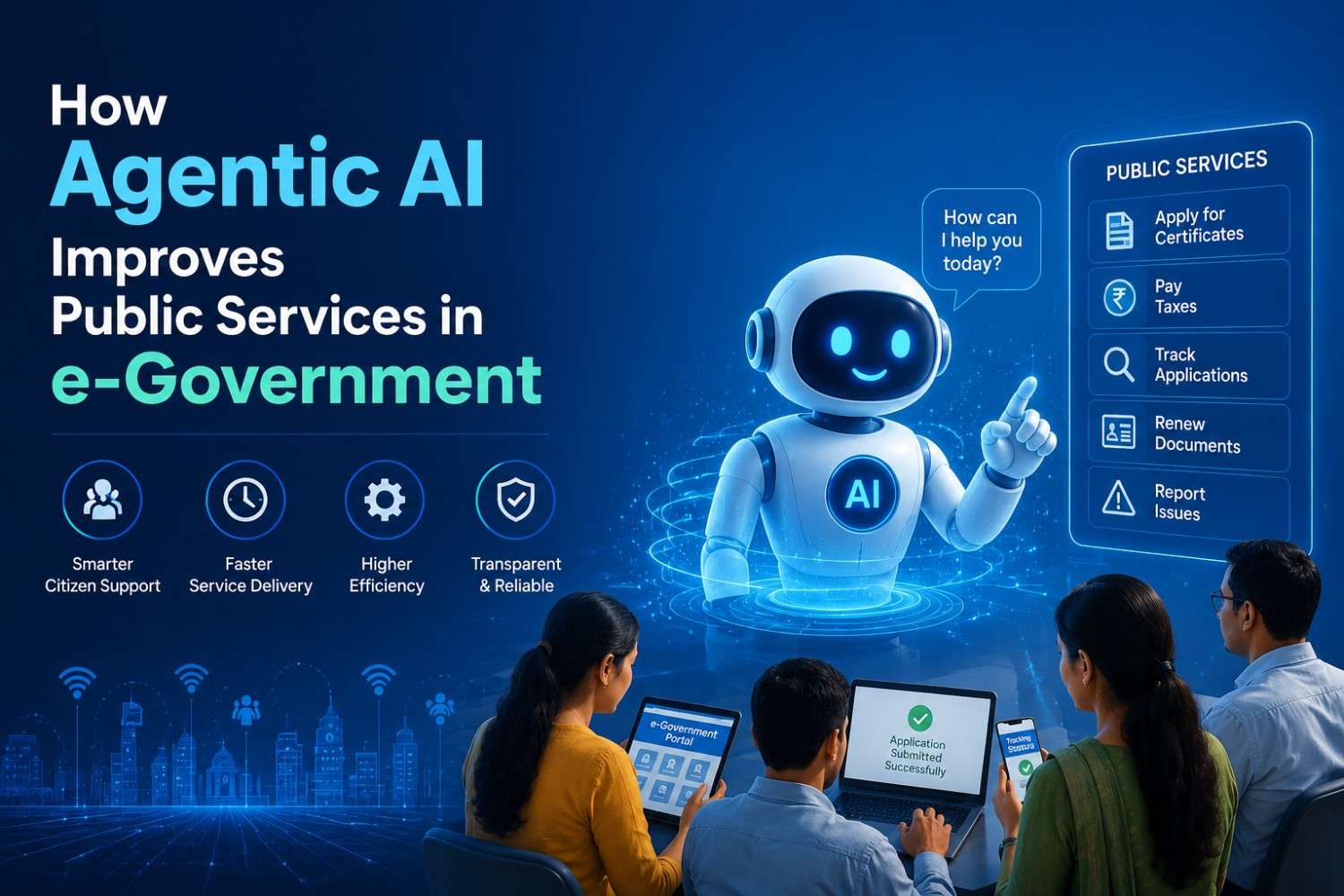

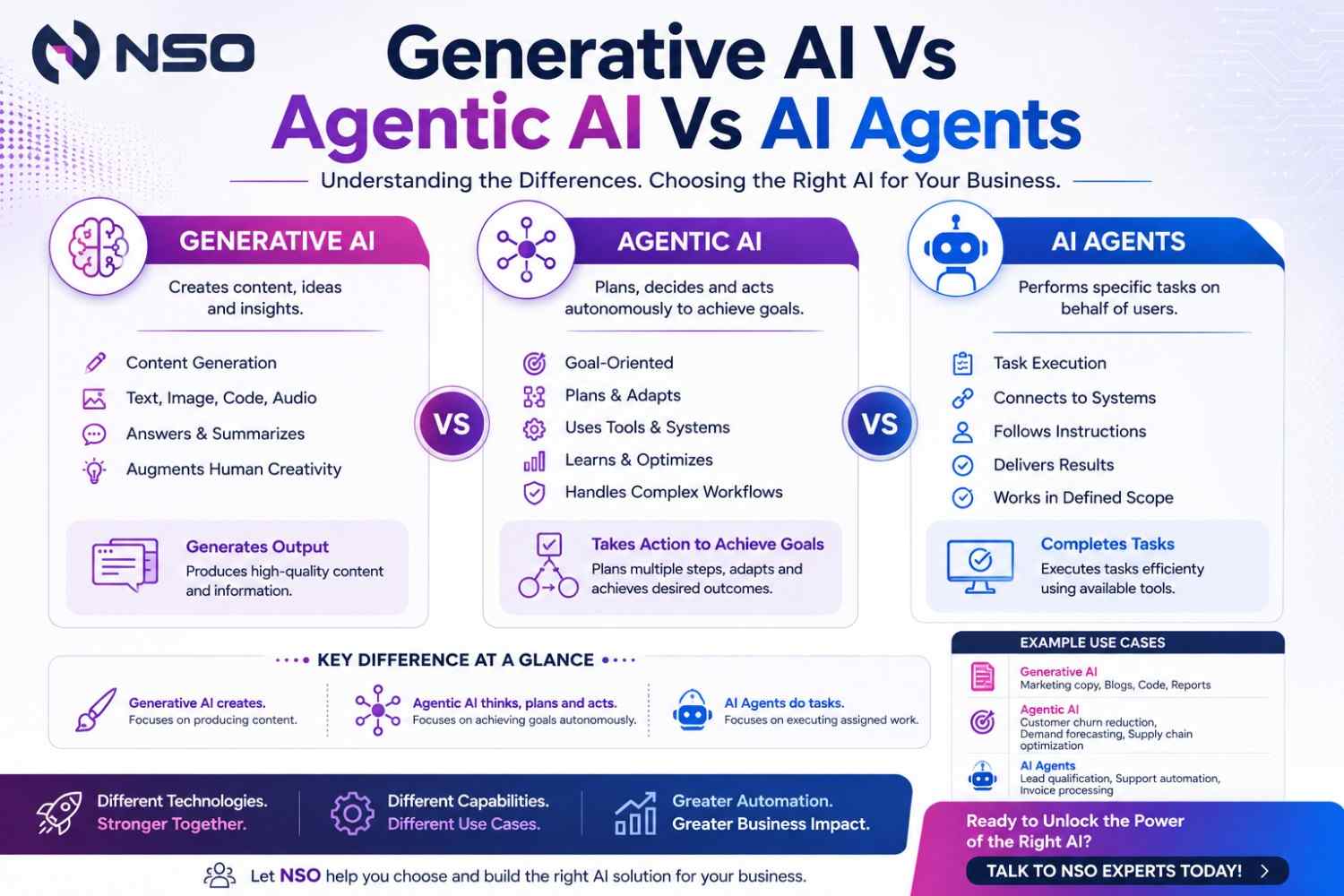
Governments worldwide are moving beyond simple digital services to build intelligent, autonomous systems that improve public service delivery. While chatbots and automation have already simplified many citizen interactions, the next evolution is agentic AI. AI systems capable of planning, reasoning, making decisions, and completing complex tasks with minimal human intervention.
Unlike traditional AI, which responds to specific prompts, Agentic AI can analyze situations, collaborate with other systems, execute multi-step workflows, and continuously adapt based on changing conditions. For e-government platforms, this means faster service delivery, improved operational efficiency, enhanced citizen experiences, and better policy implementation.
For government agencies, municipalities, and public sector organizations, Agentic AI represents an opportunity to modernize digital governance while reducing administrative burdens and improving transparency.
What is Agentic AI?
Agentic AI refers to intelligent software agents that can independently perform tasks to achieve defined goals.
These AI agents combine technologies such as:
- Large Language Models (LLMs)
- Machine Learning
- Natural Language Processing (NLP)
- Knowledge Graphs
- Workflow Automation
- Decision Intelligence
- API Integrations
- Retrieval-Augmented Generation (RAG)
Instead of simply answering questions, Agentic AI systems can:
- Understand citizen requests
- Collect information from multiple government databases
- Verify eligibility
- Generate required documents
- Trigger approvals
- Notify relevant departments
- Monitor progress until completion
This makes them highly valuable for complex government workflows.
Importance of Agentic AI in e-Governance
Most government departments operate across multiple systems, regulations, and approval processes. Citizens often need to visit several departments to complete a single service request.
Common challenges include:
- Slow approval cycles
- Manual verification
- Disconnected departmental systems
- High operational costs
- Long response times
- Data duplication
- Inconsistent citizen support
Agentic AI addresses these challenges by acting as an intelligent digital workforce capable of coordinating tasks across departments while maintaining compliance with government policies.
Key Applications of Agentic AI in Public Services
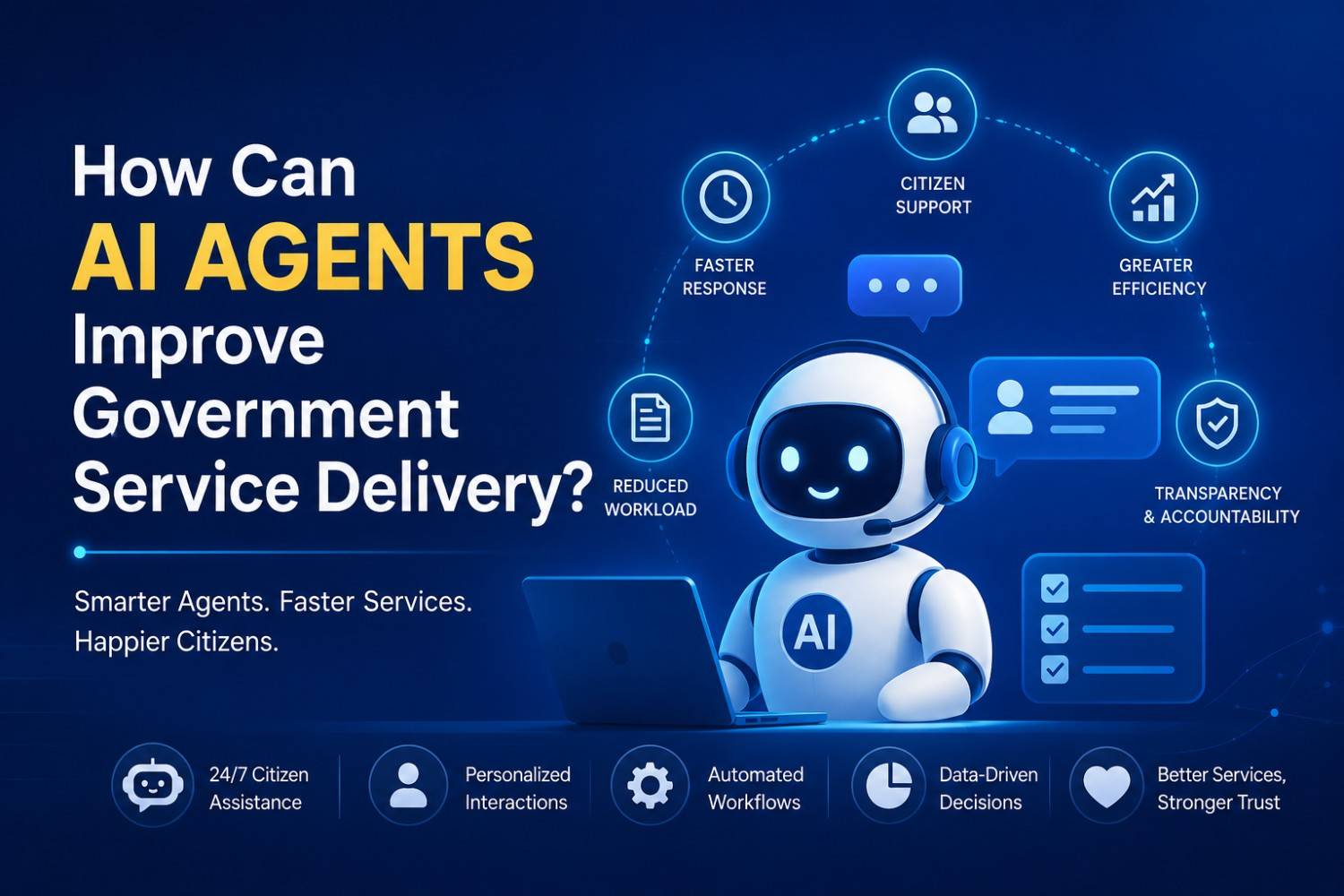
Agentic AI is transforming public services by automating complex government workflows, improving efficiency, and delivering faster, citizen-centric experiences.
1. Intelligent Citizen Service Agents
Modern citizens expect government services to be as convenient as online banking or e-commerce platforms.
Agentic AI enables virtual government assistants that can:
- Understand natural language requests
- Identify required services
- Verify identity
- Retrieve citizen records
- Submit applications
- Schedule appointments
- Track application status
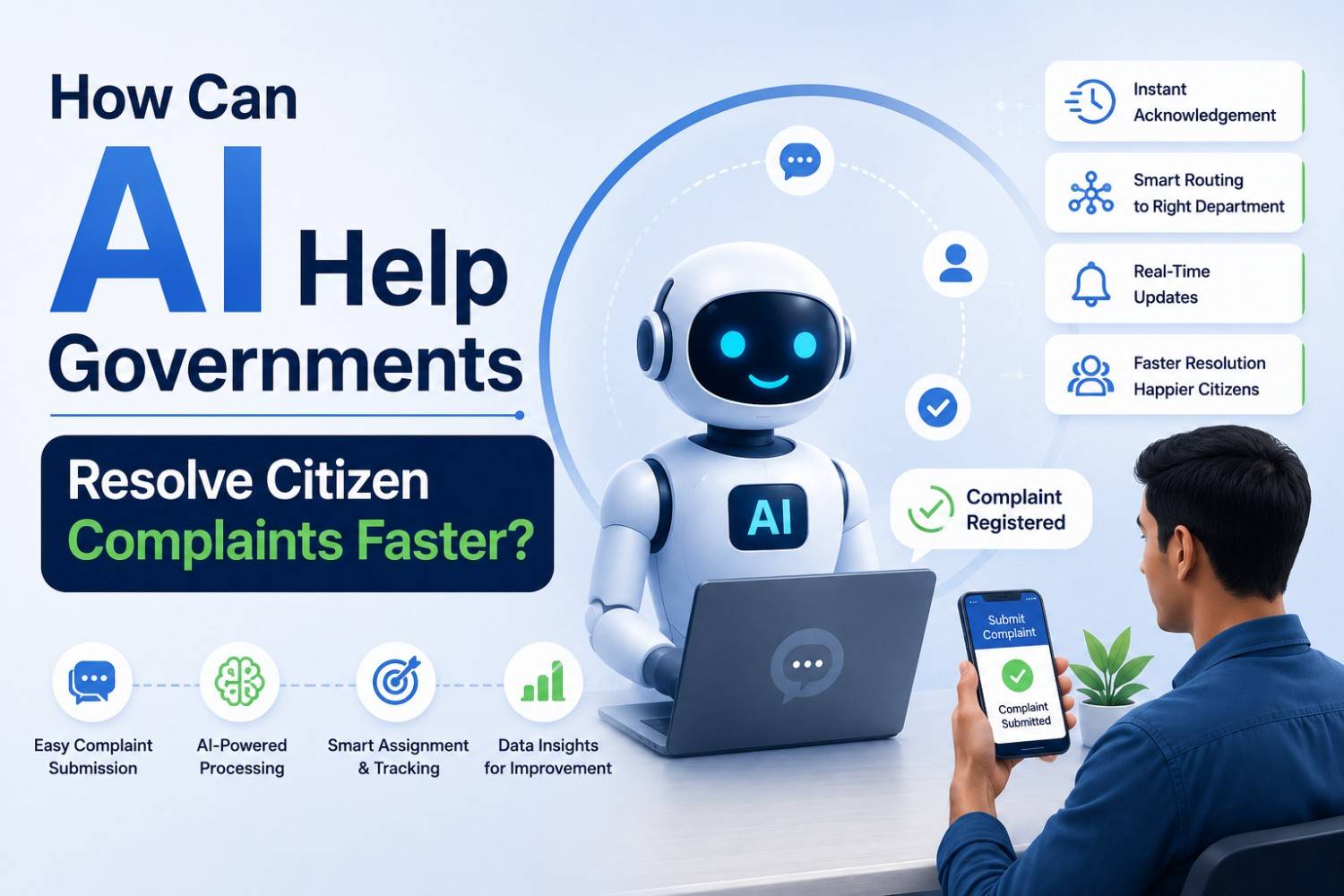
- Provide real-time updates
Instead of navigating multiple government websites, citizens interact with a single intelligent assistant that manages the complete process.
2. Automated Case Management
Many government departments process thousands of applications daily, including:
- Business licenses
- Building permits
- Welfare applications
- Pension requests
- Healthcare benefits
- Educational grants
Agentic AI can automatically:
- Review submitted documents
- Validate information
- Detect missing data
- Cross-check databases
- Prioritize urgent cases
- Assign cases to appropriate officers
- Generate status reports
This significantly reduces manual workloads while improving processing speed.
3. Multi-Department Workflow Coordination
Public services often involve multiple agencies working together.
For example, starting a new business may require approvals from:
- Tax authorities
- Municipal corporations
- Licensing departments
- Environmental agencies
- Labour departments
Agentic AI coordinates these workflows automatically by:
- Sending requests to relevant departments
- Monitoring approval status
- Handling dependencies
- Escalating delays
- Updating applicants automatically
This eliminates repetitive manual coordination between departments.
4. AI-Powered Document Processing
Government offices handle millions of documents every year.
Agentic AI combines:
- Optical Character Recognition (OCR)
- Natural Language Processing
- Intelligent Document Processing
- Data Extraction
to automatically process:
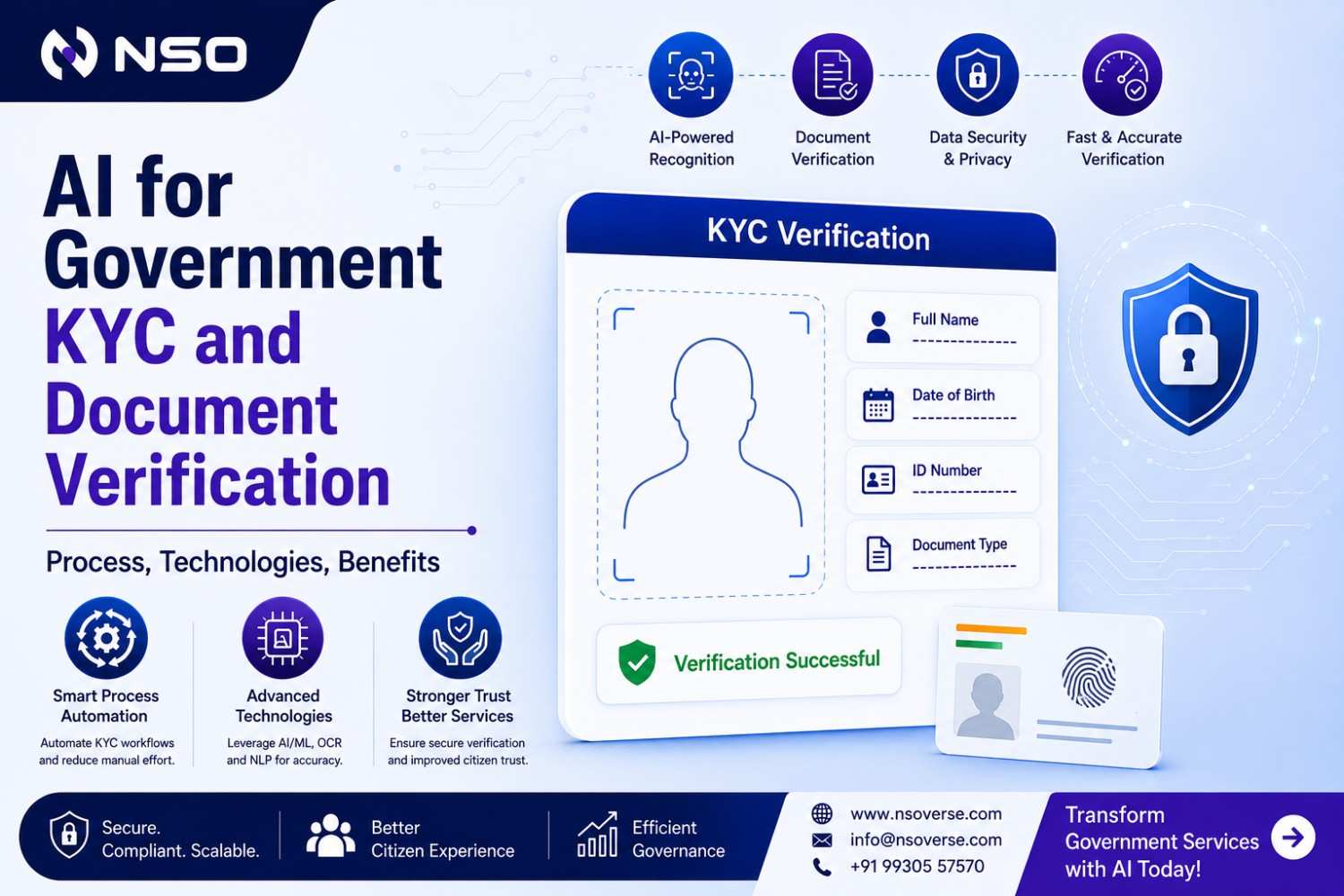
- Identity documents
- Tax forms
- Property records
- Court documents
- Healthcare records
- Compliance certificates
The AI validates information, extracts structured data, identifies inconsistencies, and routes documents to the appropriate workflow.
5. Smart Decision Support for Government Officials
Government officers frequently make decisions based on regulations, historical records, and policy guidelines.
Agentic AI assists by:
- Retrieving relevant regulations
- Comparing previous similar cases
- Highlighting policy exceptions
- Identifying compliance risks
- Recommending possible actions
The final decision remains with authorized officials, while AI provides faster and more accurate decision support.
6. Predictive Public Service Planning
Governments need accurate forecasts for resource allocation.
Agentic AI analyzes data from multiple sources to predict:
- Healthcare demand
- Public transportation usage
- Water consumption
- Disaster response requirements
- Infrastructure maintenance
- Social welfare demand
These insights enable proactive planning instead of reactive decision-making.
7. Fraud Detection and Compliance Monitoring
Government programs are vulnerable to fraudulent claims and misuse.
Agentic AI continuously monitors transactions to detect:
- Duplicate applications
- Identity fraud
- Fake documentation
- Suspicious financial activities
- Benefit abuse
- Procurement anomalies
By identifying unusual patterns early, agencies can reduce financial losses while maintaining program integrity.
8. Personalized Citizen Services
Every citizen has unique needs based on age, occupation, income, location, and eligibility.
Agentic AI can personalize services by:
- Recommending government schemes
- Sending renewal reminders
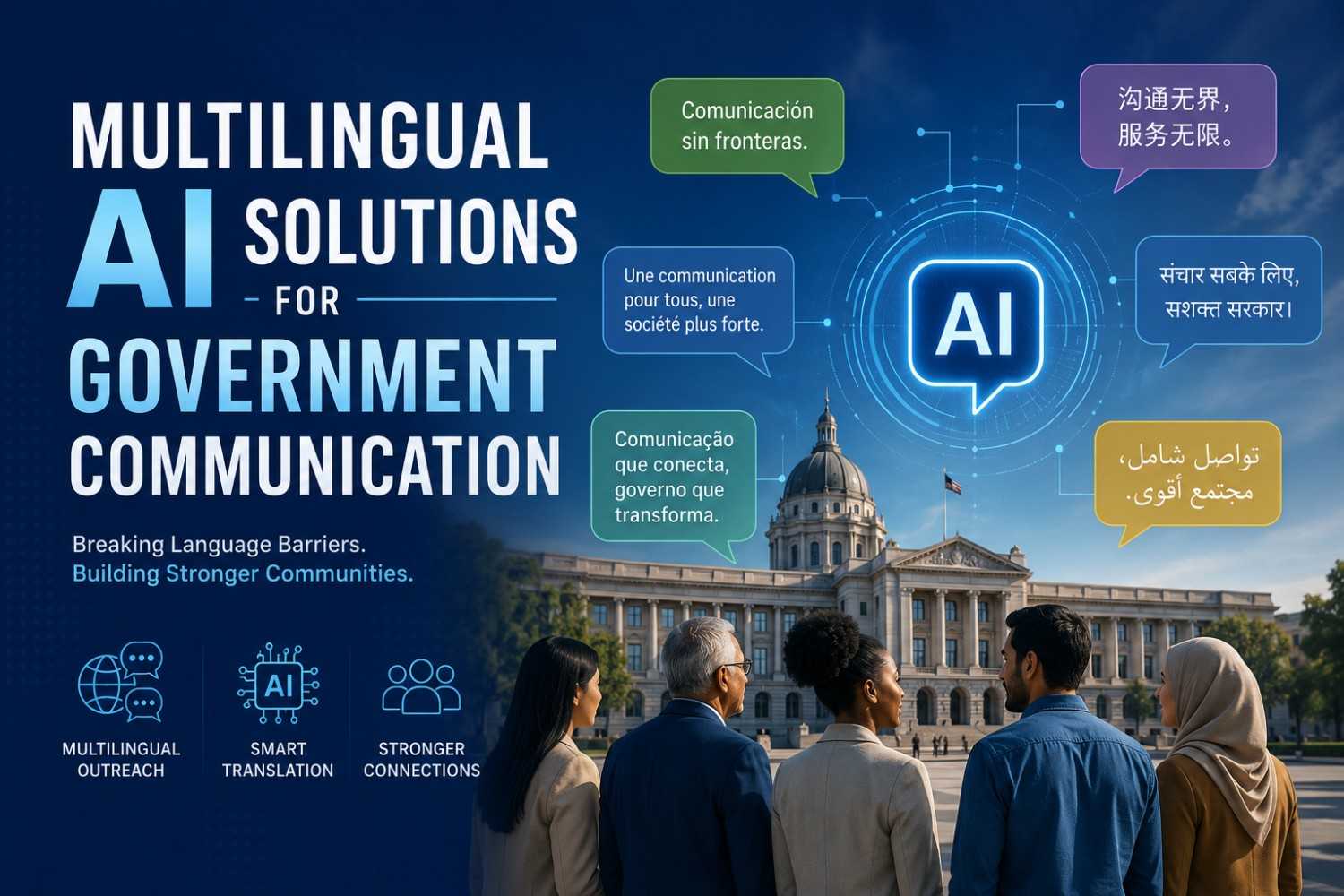
- Providing multilingual assistance
- Suggesting relevant benefits
- Guiding citizens through application processes
This creates a more citizen-centric digital government experience.
Technical Architecture Behind Agentic AI in e-Government
A typical agentic AI platform for government includes multiple integrated components.
Large Language Models (LLMs)
Enable natural conversations, reasoning, summarization, and contextual understanding.
Retrieval-Augmented Generation (RAG)
Retrieves accurate information from government knowledge bases, policy documents, and regulations before generating responses, reducing the risk of outdated or inaccurate information.
Knowledge Graphs
Connect citizens, departments, regulations, services, and documents to improve contextual decision-making.
Workflow Orchestration
Coordinates complex government processes involving multiple systems, departments, and approvals while tracking each step.
Secure API Integration
Allows AI agents to interact with:
- Citizen databases
- Tax systems
- Identity verification platforms
- Land records
- Healthcare systems
- Payment gateways
Human-in-the-Loop Governance
Ensures that high-impact decisions requiring legal or administrative authority are reviewed and approved by government officials before execution.
Benefits of Agentic AI for Government Organizations
Implementing Agentic AI provides measurable advantages across public sector operations.
Improved Citizen Satisfaction
Citizens receive quicker responses, consistent information, and 24/7 digital support.
Better Policy Compliance
AI agents follow predefined regulations and workflows consistently, reducing process deviations.
Higher Operational Efficiency
Cross-department collaboration becomes more streamlined through automated coordination and data exchange.
Scalable Public Services
AI agents can manage large volumes of requests during peak periods without significantly increasing operational resources.
Data-Driven Decision Making
Government leaders gain actionable insights from real-time analytics, enabling more informed planning and policy decisions.
Security and Governance Considerations
Government AI systems must prioritize security, privacy, and accountability.
Key considerations include:
- Role-based access controls
- End-to-end data encryption
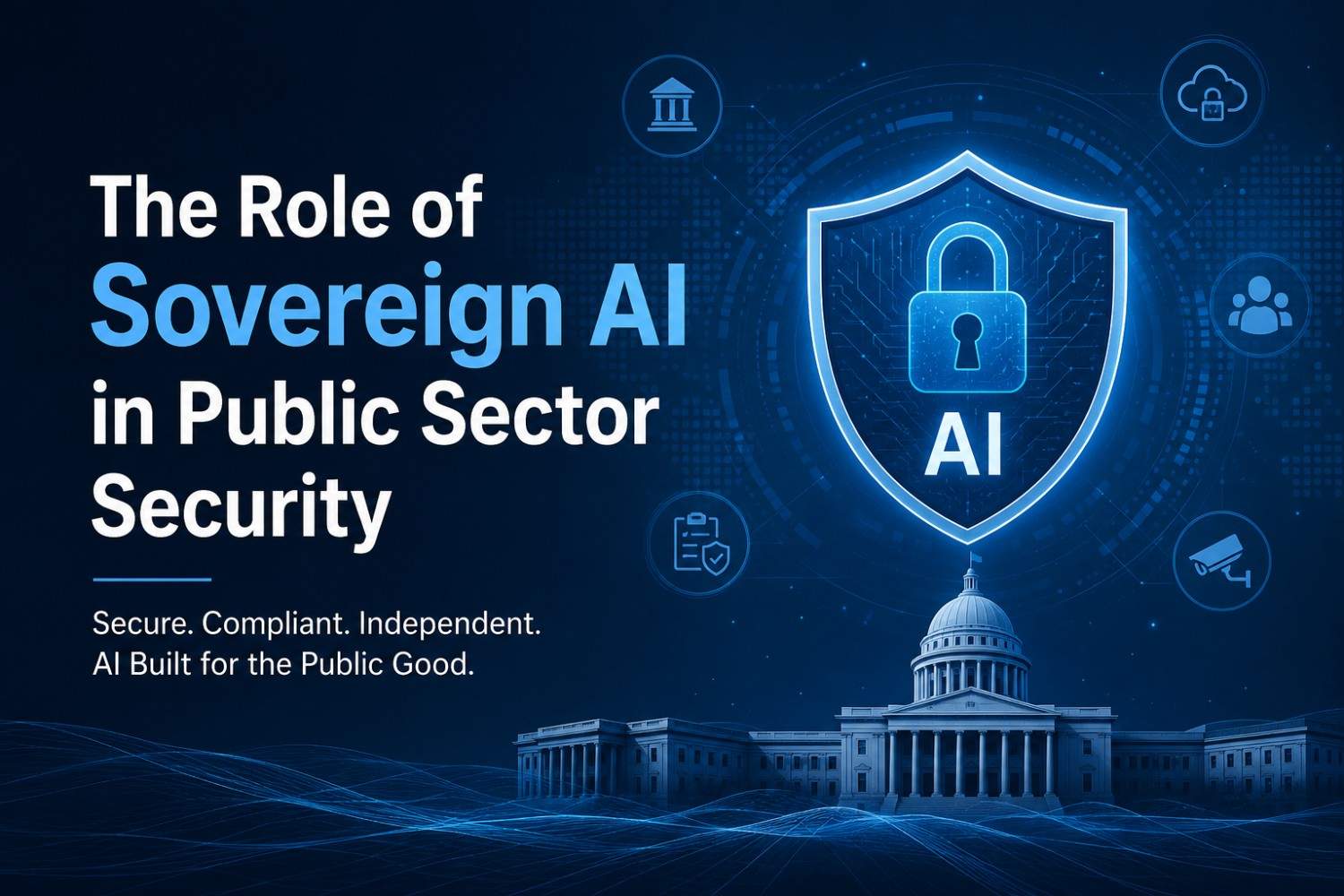
- Audit logs for AI actions
- Explainable AI for decision transparency
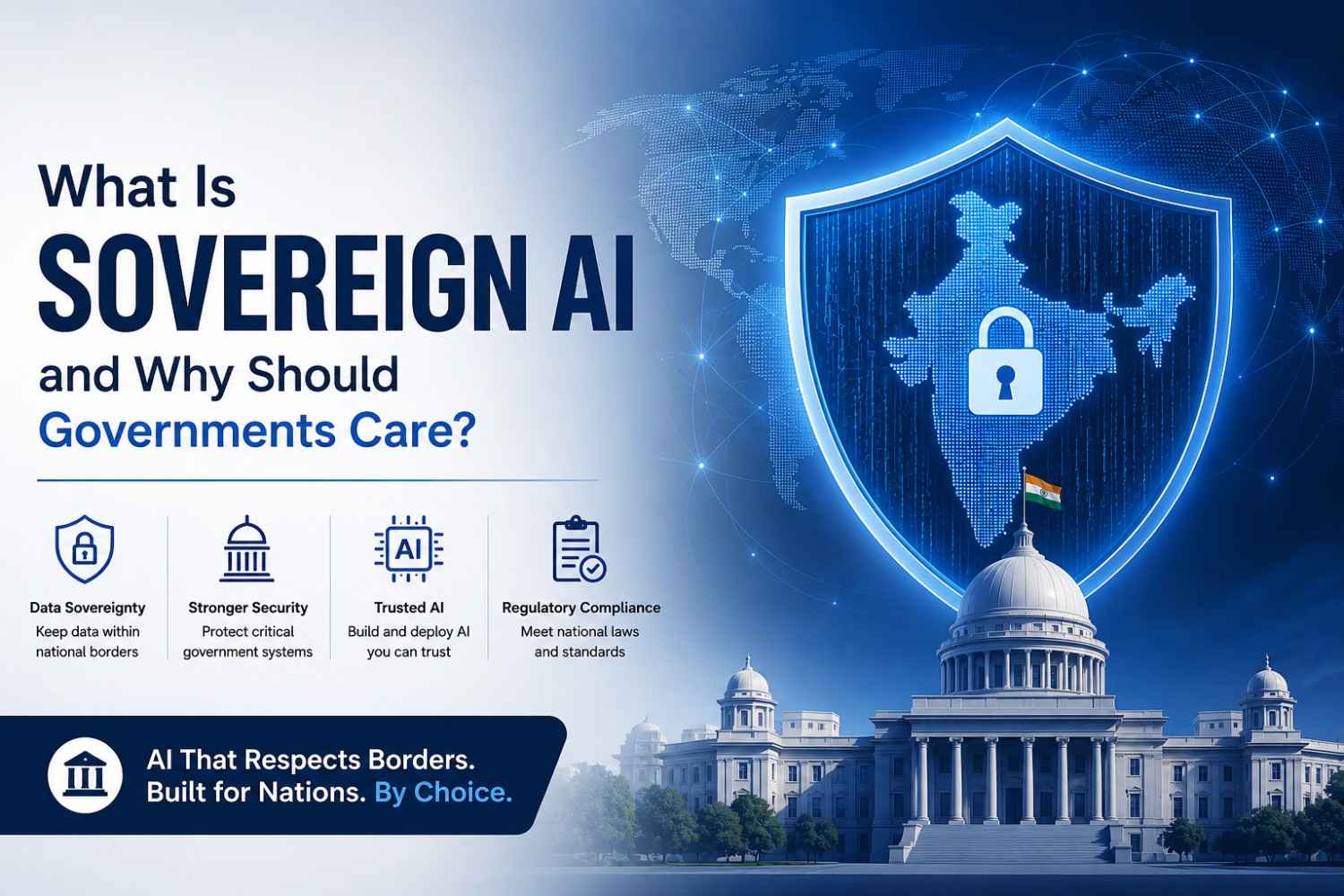
- Compliance with data protection regulations
- Human oversight for critical decisions
- Continuous monitoring for bias and model performance
These safeguards help ensure that AI systems remain trustworthy and aligned with public sector requirements.
Conclusion
Agentic AI is transforming e-Government by enabling autonomous, intelligent, and secure public service delivery. From automating case management and coordinating multi-department workflows to supporting policy decisions and enhancing citizen engagement, Agentic AI helps government organizations improve efficiency, transparency, and service quality.
Organizations planning their digital transformation should focus on scalable AI architectures, secure system integration, strong governance frameworks, and responsible AI practices. By implementing enterprise-grade Agentic AI solutions, public sector agencies can modernize operations, reduce administrative complexity, and deliver smarter digital services that meet the evolving expectations of citizens.
NSO delivers secure, scalable, and enterprise-grade Agentic AI solutions for government. From intelligent virtual assistants and workflow automation to AI-powered document processing and seamless system integration, we help public sector agencies enhance efficiency, improve citizen services, and accelerate digital transformation. Contact NSO today to modernize your e-Government initiatives.
Frequently Asked Questions
1. What is Agentic AI in e-Government?
Agentic AI is an advanced form of artificial intelligence that can independently plan, reason, and execute complex government workflows with minimal human intervention, improving public service delivery and operational efficiency.
2. How is Agentic AI different from traditional government chatbots?
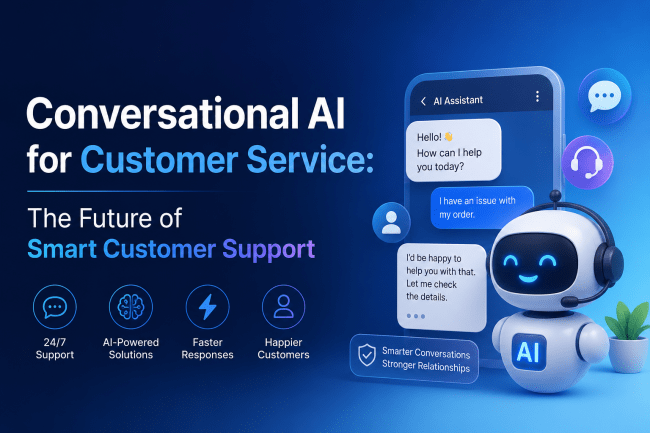
Traditional chatbots primarily answer predefined questions, whereas Agentic AI can complete end-to-end tasks such as verifying documents, coordinating approvals, retrieving records, and managing multi-step government processes.
3. Which public services can benefit from Agentic AI?
Agentic AI can support business licensing, tax administration, social welfare, healthcare services, land records, citizen grievance management, permit approvals, document verification, and public information services.
4. How does Agentic AI improve citizen experience?
It provides faster responses, personalized assistance, multilingual communication, automated application processing, real-time status updates, and seamless interactions across multiple government departments.
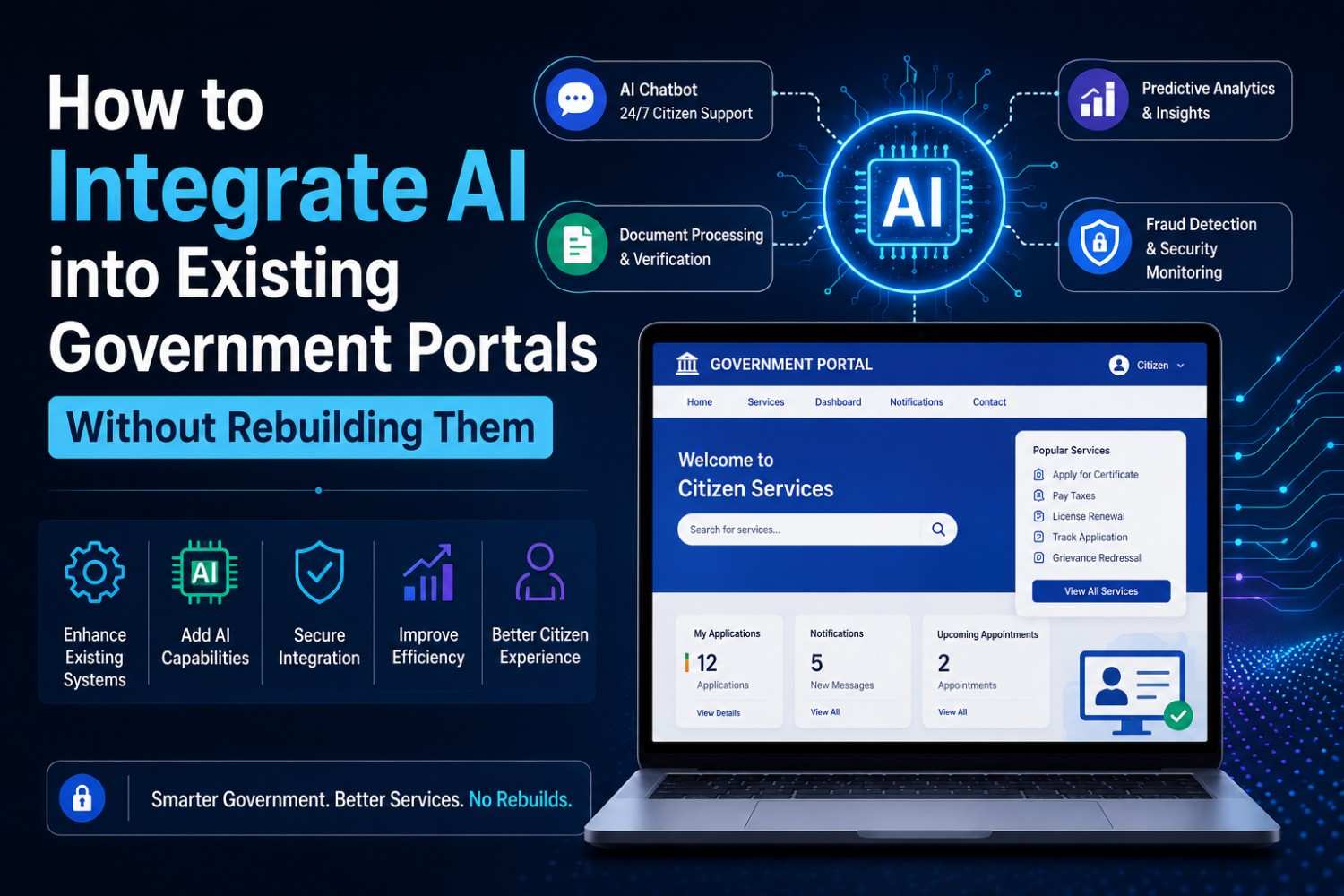
5. Can Agentic AI integrate with existing government systems?
Yes. Agentic AI platforms integrate with existing government databases, ERP systems, identity management platforms, payment gateways, and departmental applications through secure APIs and middleware.
.png)

.png)
.png)
.png)
.png)
_(1).png)
.png)