

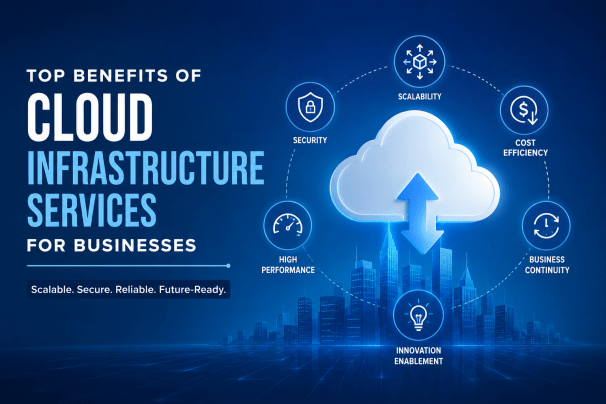

Running a business with outdated IT systems can be expensive, slow, and difficult to manage. That is why many companies are now moving to Cloud Infrastructure Services. Cloud technology helps businesses store data, run applications, and manage operations through the internet without depending heavily on physical servers and hardware.
With Cloud Infrastructure Services, businesses can reduce IT costs, improve data security, support remote work, and scale resources whenever needed. Whether it is a startup or a large company, cloud solutions make business operations faster, more flexible, and easier to manage.
As digital technology continues to grow, cloud infrastructure has become an important solution for businesses looking to improve efficiency, productivity, and long-term growth.
What Are Cloud Infrastructure Services?
Cloud Infrastructure Services refer to on-demand computing resources delivered through cloud platforms.
These services include:
- Virtual servers
- Cloud storage
- Networking
- Security systems
- Backup solutions
- Databases
- Disaster recovery
- Computing power
Businesses can access these resources online and pay only for what they use.
Popular cloud service providers include:
- Amazon Web Services
- Microsoft Azure
- Google Cloud
Types of Cloud Infrastructure Services
|
Type |
Description |
|
Public Cloud |
Shared cloud resources provided over the internet |
|
Private Cloud |
Dedicated cloud environment for a single business |
|
Hybrid Cloud |
Combination of public and private cloud |
|
Multi-Cloud |
Use of multiple cloud providers together |
Why Businesses Are Moving to Cloud Infrastructure
Businesses today require:
- Faster digital transformation
- Remote work support
- Secure data access
- Better collaboration
- Flexible IT resources
- Reduced operational costs
Cloud Infrastructure Services help businesses achieve these goals without building expensive IT infrastructure internally.
Top Benefits of Cloud Infrastructure Services for Businesses
From startups to large enterprises, cloud technology offers several advantages that improve business performance, scalability, and productivity.
Here are some of the top benefits of Cloud Infrastructure Services for businesses.
1. Reduced IT Costs
One of the biggest advantages of Cloud Infrastructure Services is cost savings. Traditional infrastructure requires businesses to invest heavily in physical servers, data centers, hardware upgrades, cooling systems, and maintenance staff. These expenses can significantly increase operational costs.
Cloud solutions eliminate many of these costs by offering a flexible pay-as-you-use pricing model. Businesses only pay for the resources they use, which helps reduce unnecessary spending.
Cost benefits include:
- Pay-as-you-use pricing
- Lower hardware investment
- Reduced maintenance costs
- No need for large IT teams
- Lower electricity and operational expenses
Businesses can also scale resources based on demand instead of purchasing expensive equipment in advance.
2. Easy Scalability
Business needs can change quickly, especially during high traffic periods or rapid business growth. Companies may suddenly require more storage, bandwidth, or computing power.
With Cloud Infrastructure Services, businesses can scale resources instantly without affecting operations.
Examples of Scalability:
- E-commerce websites during festive sales
- Streaming platforms during live events
- Business applications with growing users
- Startups expanding rapidly
Cloud systems allow organizations to increase or decrease resources easily without downtime.
3. Improved Data Security
Data security is a major concern for every business. Modern cloud providers offer advanced security technologies that help protect sensitive business information from cyber threats and unauthorized access.
Security Features Include:
- Data encryption
- Multi-factor authentication
- Firewall protection
- Security monitoring
- Automatic updates
- Threat detection
- Access control management
Many cloud providers also comply with global security and privacy standards to ensure better data protection.
4. Better Business Continuity
Unexpected events such as cyberattacks, hardware failures, or natural disasters can disrupt business operations and lead to data loss.
Cloud Infrastructure Services provide disaster recovery and backup solutions that help businesses maintain continuity and minimize downtime.
Business Continuity Benefits:
- Automatic data backups
- Faster recovery systems
- Reduced downtime
- Remote data access
- High availability
This ensures businesses can continue operating even during emergencies.
5. Remote Accessibility
Cloud infrastructure enables employees to access business systems, applications, and files from anywhere using an internet connection.
This became especially important with the rise of remote and hybrid work environments.
Benefits of Remote Access:
- Work from anywhere
- Improved team collaboration
- Easy file sharing
- Real-time communication
- Better workforce flexibility
Employees can securely access business resources through laptops, smartphones, or tablets.
6. Faster Deployment and Setup
Setting up traditional IT infrastructure often takes weeks or even months due to hardware installation and configuration processes.
With Cloud Infrastructure Services, businesses can deploy servers, applications, and storage systems within minutes.
Fast Deployment Helps Businesses:
- Launch projects quickly
- Reduce operational delays
- Improve productivity
- Speed up software development
- Support rapid business growth
This flexibility is highly beneficial for startups and fast-growing companies.
7. Automatic Software Updates
Managing software updates manually can be expensive and time-consuming for IT teams.
Cloud service providers regularly perform automatic system updates to ensure businesses always use secure and updated technology.
Automatic Updates Include:
- Security patches
- Performance improvements
- System upgrades
- Bug fixes
This reduces IT workload and improves overall system efficiency.
8. Better Collaboration Across Teams
Cloud platforms improve communication and teamwork by allowing employees to work together on shared files and applications in real time.
Collaboration Benefits:
- Shared documents
- Real-time editing
- Faster communication
- Centralized data access
- Improved workflow management
This helps businesses improve productivity and coordination across departments.
9. High Performance and Reliability
Leading cloud providers operate advanced global data centers with strong networking systems and reliable infrastructure.
This helps businesses achieve better system performance and service reliability.
Performance Benefits Include:
- Faster system performance
- High uptime
- Reliable services
- Low latency
- Better user experience
10. Environment-Friendly Infrastructure
Cloud data centers are generally more energy-efficient than traditional on-premise infrastructure.
Many cloud providers invest in renewable energy and sustainable technologies to reduce environmental impact.
Environmental Benefits:
- Reduced energy consumption
- Lower carbon emissions
- Optimized resource utilization
- Reduced hardware waste
Businesses using cloud infrastructure services can support environmentally responsible operations while improving efficiency.
Cloud Infrastructure Services vs Traditional Infrastructure
Here are the key differences between traditional infrastructure and modern cloud infrastructure services.
|
Feature |
Traditional Infrastructure |
Cloud Infrastructure Services |
|
Initial Cost |
High |
Low |
|
Scalability |
Limited |
Highly Flexible |
|
Maintenance |
Manual |
Managed by Provider |
|
Deployment Time |
Slow |
Fast |
|
Remote Access |
Limited |
Easy |
|
Security |
Internal Responsibility |
Advanced Provider Security |
|
Backup & Recovery |
Complex |
Automated |
|
Hardware Requirement |
Physical Servers Needed |
No Physical Hardware |
Future of Cloud Infrastructure Services
Cloud computing continues to grow rapidly across industries.
Future trends include:
- Artificial Intelligence integration
- Edge computing
- Serverless architecture
- Hybrid cloud expansion
- Advanced cybersecurity
- Automation and analytics
Businesses investing in cloud infrastructure services today can stay prepared for future digital transformation.
Conclusion
Businesses today need flexible, scalable, and secure technology solutions to compete in the digital market. Cloud Infrastructure Services help organizations reduce IT costs, improve performance, support remote work, and strengthen business continuity.
From startups to global enterprises, cloud infrastructure has become an essential part of modern business operations. Companies that adopt cloud solutions can improve efficiency, increase productivity, and adapt faster to changing market demands.
As technology continues to evolve, the importance of cloud infrastructure services will continue to grow across every industry.
Frequently Asked Questions
1. Why are cloud infrastructure services important for businesses?
Ans: They help businesses reduce costs, improve scalability, enhance security, and support remote access and digital transformation.
2. Are cloud infrastructure services secure?
Ans: Yes, most cloud providers offer advanced security features like encryption, authentication, and continuous monitoring to protect business data.
3. Which industries use cloud infrastructure services?
Ans: Healthcare, banking, retail, education, IT, manufacturing, and e-commerce industries widely use cloud infrastructure solutions.
4. What is the biggest benefit of cloud infrastructure services?
Ans: The biggest benefit is flexibility. Businesses can scale resources quickly while reducing infrastructure and maintenance costs.





.png)









.png)
.png)
.png)
.png)
_(1).png)
.png)