

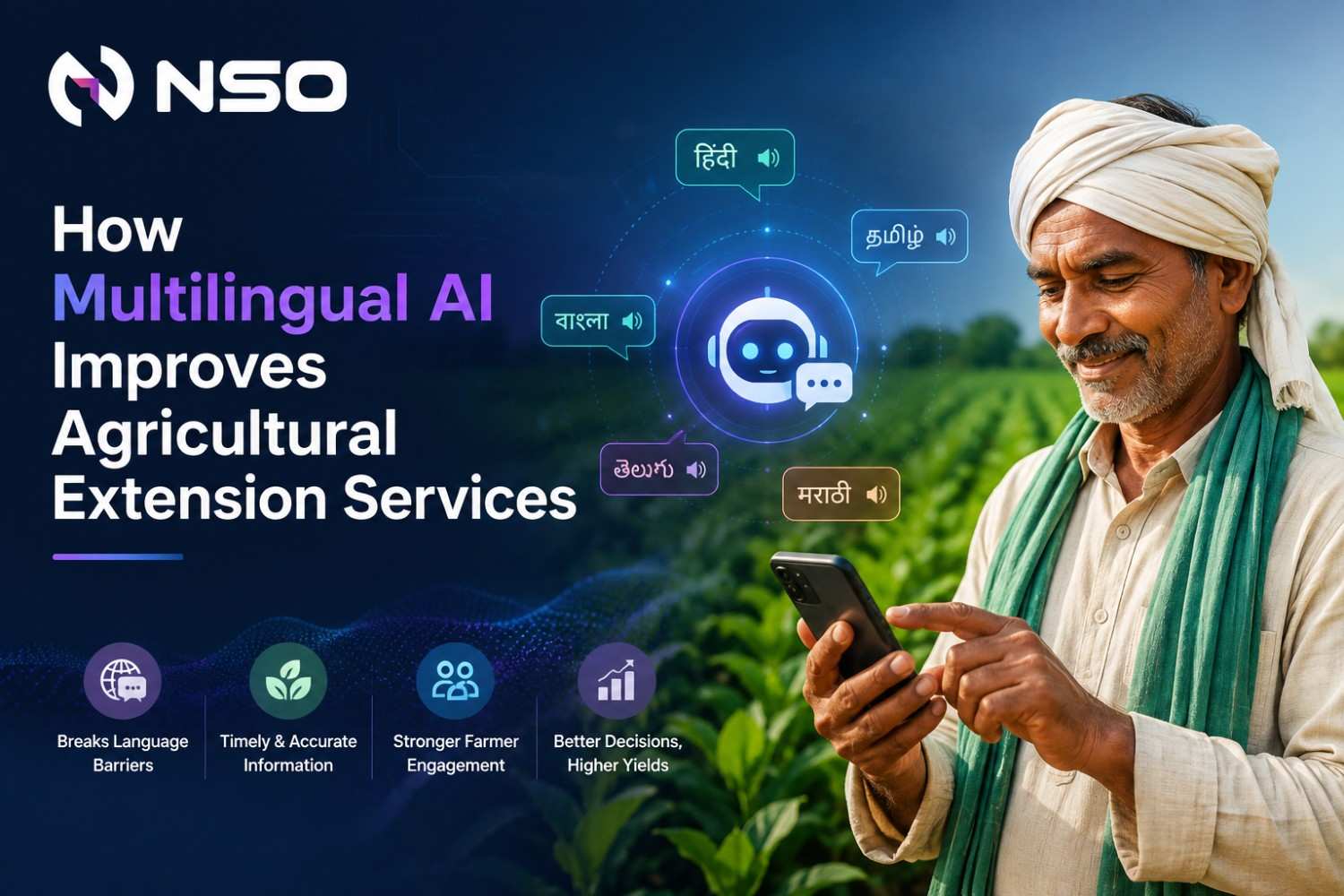

A farmer may understand a crop problem clearly, but if expert advice arrives in the wrong language, valuable knowledge can become ineffective. Language barriers continue to limit access to timely and actionable agricultural guidance, especially among farmers who speak regional languages or local dialects.
Agriculture extension services in mumbai can help bridge the gap between scientific knowledge and practical farming. However, multilingual AI is taking this support further by enabling real-time communication in farmers’ preferred languages.
AI-powered agricultural platforms can deliver personalized farming recommendations, pest and disease alerts, weather updates, crop guidance, and government scheme information through localized communication. This makes agricultural advice easier to understand and act upon.
By integrating multilingual AI, Agriculture extension services in mumbai can provide context-aware assistance, improve farmer engagement, encourage modern farming practices, and support better decision-making. This transformation is creating smarter, more accessible, and farmer-first digital extension ecosystems while contributing to greater agricultural productivity and long-term food security.
Why Traditional Agricultural Extension Services Face Communication Challenges
Agricultural experts possess valuable technical knowledge, but delivering that knowledge effectively remains a challenge. Extension officers often cover large geographical areas where dozens of languages and dialects are spoken. Farmers may hesitate to ask questions because technical terminology is unfamiliar or difficult to understand.
Common communication challenges include:
- Language barriers between extension officers and farmers
- Limited availability of trained agricultural advisors
- Delayed dissemination of weather and pest outbreak information
- Low adoption of modern farming techniques due to unclear instructions
- Difficulty explaining government subsidies and agricultural schemes
These issues reduce the overall impact of agricultural extension programs, particularly in rural communities where access to digital resources is limited.
How Multilingual AI Bridges the Language Gap
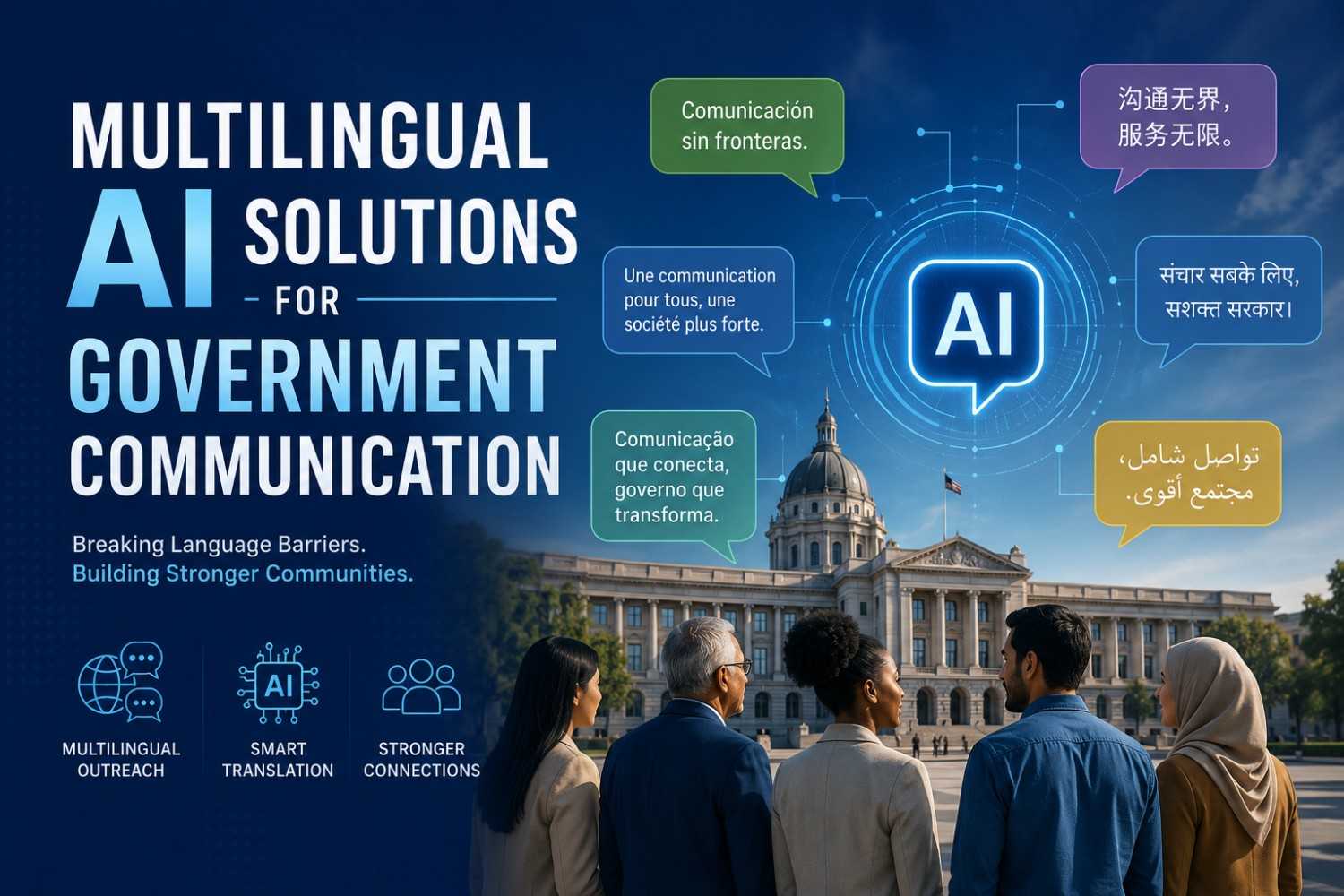
Multilingual AI combines natural language processing, speech recognition, translation models, and conversational AI to communicate naturally with farmers in multiple languages.
Rather than simply translating text, modern AI understands agricultural context, local farming terminology, crop names, seasonal practices, and regional expressions. This creates meaningful conversations instead of literal translations.
For example, a farmer can ask questions through voice in a local language about crop diseases, irrigation schedules, or fertilizer usage, and receive immediate responses that are both technically accurate and culturally relevant.
This accessibility significantly increases farmer engagement and trust.
Real-Time Advisory Services in Local Languages
Agricultural decisions often depend on timing. A delay of even one day during pest infestation or adverse weather conditions can lead to significant crop losses.
Multilingual AI enables extension services to provide:
- Instant crop advisory messages
- Localized weather warnings
- Pest and disease outbreak alerts
- Irrigation recommendations
- Harvest planning guidance
Because farmers receive these updates in their native language, they can act faster and with greater confidence.
Voice-enabled AI assistants also help farmers who have limited literacy by allowing them to receive spoken guidance instead of reading lengthy documents.
Personalized Farming Recommendations Using AI
Every farm is different. Soil quality, rainfall patterns, crop selection, and farming practices vary across regions.
Multilingual AI analyses multiple datasets to provide personalized recommendations, including:
- Crop-specific nutrient management
- Fertilizer optimization
- Soil health improvement strategies
- Water management advice
- Crop rotation planning
- Disease prevention techniques
Instead of distributing generic recommendations, agricultural agencies can deliver highly targeted guidance tailored to individual farming conditions.
This personalization increases productivity while reducing unnecessary input costs.
Improving Government Agricultural Scheme Awareness
Many farmers miss opportunities simply because they are unaware of available government schemes or struggle to understand complex eligibility requirements.
Multilingual AI simplifies access by explaining:
- Subsidy programmes
- Crop insurance
- Financial assistance
- Loan eligibility
- Equipment grants
- Digital registration processes
Interactive AI assistants answer follow-up questions instantly, reducing dependency on physical service centres and improving participation in agricultural development initiatives.
Supporting Extension Officers with AI
Multilingual AI is not replacing agricultural experts, it is making them more effective.
Extension officers can use AI-powered platforms to:
- Translate technical recommendations instantly
- Generate multilingual educational materials
- Analyse recurring farmer questions
- Prioritise high-risk farming regions
- Schedule proactive advisory campaigns
This allows experts to spend more time solving complex agricultural problems while AI handles routine communication at scale.
Voice AI Makes Agricultural Support More Accessible
In many rural areas, farmers are more comfortable speaking than typing.
Voice-enabled multilingual AI offers a natural communication experience by allowing farmers to:
- Ask questions verbally
- Receive spoken responses
- Report crop issues
- Upload crop images for diagnosis
- Request weather updates
- Access government services through simple conversations
This dramatically improves accessibility for elderly farmers and communities with limited digital literacy.
Data-Driven Agricultural Decision Making
Every interaction with AI creates valuable insights for agricultural authorities.
Multilingual AI platforms help organisations identify:
- Frequently occurring crop diseases
- Regional pest outbreaks
- Farmer information gaps
- Seasonal farming trends
- Adoption rates of modern techniques
- Demand for government support programmes
These insights enable governments and agricultural institutions to design more effective policies and extension programmes based on real-world data rather than assumptions.
Why Agricultural Organisations Should Invest in Multilingual AI
Agriculture is becoming increasingly data-driven, but its success still depends on clear communication with farmers. multiligual ai software development removes one of the biggest barriers to knowledge sharing by making expert guidance understandable, accessible, and available whenever farmers need it.
Organisations that invest in custom software development with multilingual AI can improve farmer engagement, expand advisory coverage, reduce operational costs, strengthen rural digital inclusion, and deliver measurable improvements in agricultural productivity. As climate challenges, labour shortages, and food security concerns continue to grow, intelligent multilingual communication powered by advanced software development will become a critical component of modern agricultural extension services.
Conclusion
Agricultural extension services in Mumbai are most effective when farmers can easily understand and act on expert advice. Multilingual AI transforms this experience by delivering real-time, personalised, and voice-enabled agricultural support in regional languages, ensuring that valuable knowledge reaches every farming community without language becoming a barrier. From crop management and pest control to weather alerts and government scheme awareness, AI empowers both farmers and extension officers with faster, smarter, and more accessible communication.
NSO develops secure, enterprise-grade multilingual AI solutions that help governments, agricultural departments, agritech companies, and rural development organisations modernise extension services with intelligent automation, conversational AI, and regional language support.
If you're looking to build scalable, citizen-centric agricultural AI platforms that improve farmer engagement and operational efficiency, contact NSO today and discover how multilingual AI can transform your agricultural extension services.
Frequently Asked Questions
1. What is multilingual AI in agriculture?
Multilingual AI uses artificial intelligence to communicate with farmers in multiple regional languages through text and voice, making agricultural information easier to understand and access.
2. How does multilingual AI improve agricultural extension services?
It delivers personalised crop advice, weather alerts, pest management recommendations, and government scheme information in farmers' preferred languages, improving engagement and decision-making.
3. Can multilingual AI support farmers with limited literacy?
Yes. Voice-enabled AI assistants allow farmers to ask questions and receive spoken responses, making agricultural guidance accessible even to users who cannot read or write confidently.
4. How does AI help agricultural extension officers?
AI automates multilingual communication, translates technical content, analyses farmer queries, and helps officers focus on complex advisory tasks while improving service reach.
5. Is multilingual AI suitable for government agriculture programmes?
Absolutely. Government departments can use multilingual AI to improve farmer outreach, increase awareness of subsidy schemes, streamline citizen support, and deliver scalable digital agricultural services across diverse linguistic regions.

.png)




.png)

.png)
.png)
.png)
_(1).png)
.png)