
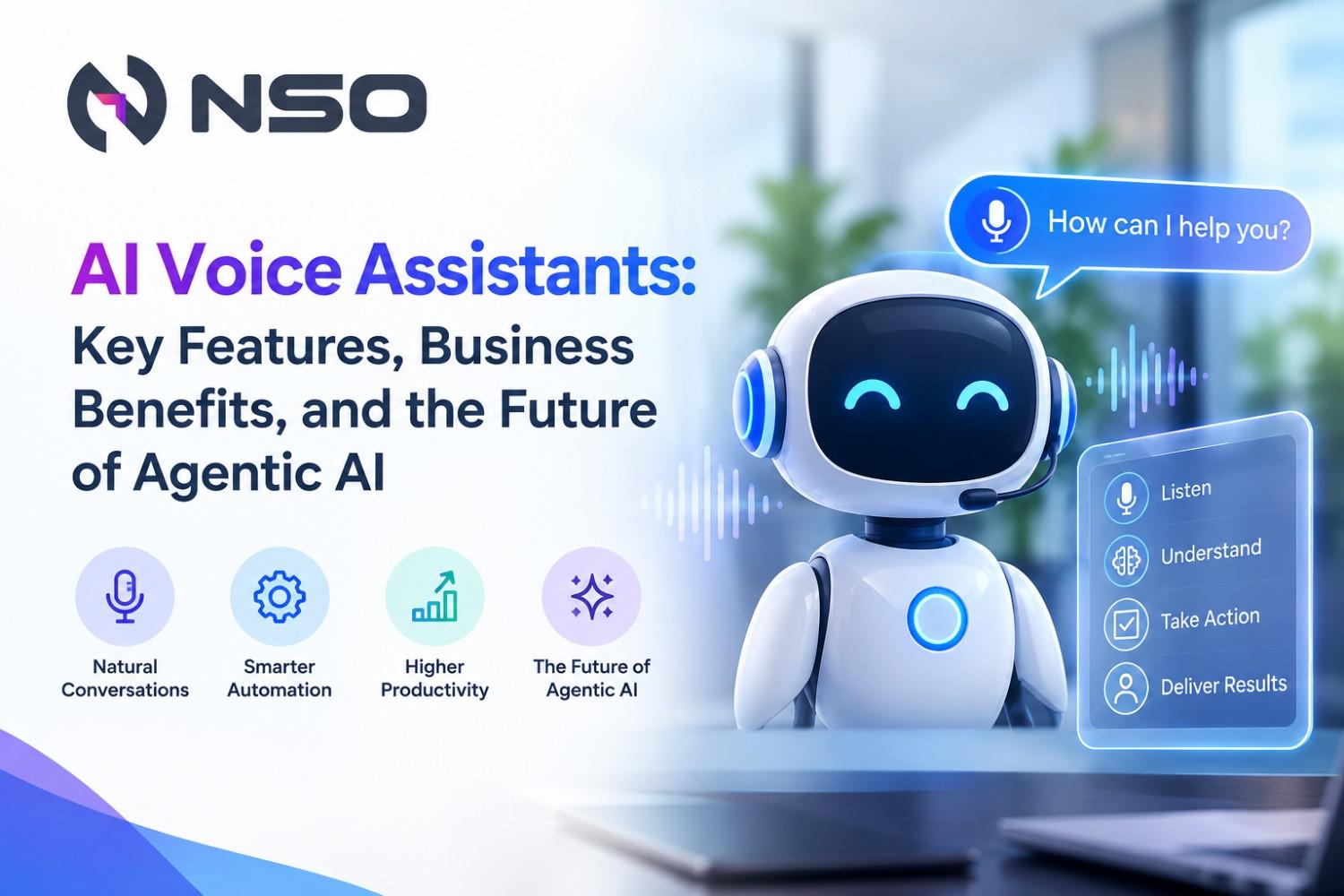

AI voice assistants help businesses automate conversations, answer customer questions, and manage routine tasks through spoken interactions. Modern systems combine speech recognition, natural language processing, and text-to-speech technology. With agentic AI, these assistants can also interpret goals, make decisions within defined permissions, and execute connected workflows across business systems.
Imagine a customer calling your business after working hours and receiving immediate, helpful support. An intelligent voice system can answer questions, qualify leads, and schedule appointments without waiting for an employee. This makes voice technology an important part of modern customer experience strategies.
Businesses increasingly expect faster responses and more convenient communication channels. Traditional phone systems often struggle with complex questions and changing customer needs. Modern voice solutions offer more flexible, conversational, and scalable customer interactions.
The evolution of voice technology now extends beyond answering predefined questions. Agentic AI introduces systems that can understand objectives and complete permitted tasks. For businesses, this creates opportunities to improve service quality and operational efficiency.
What Is an AI Voice Assistant?
An AI voice assistant is software that understands spoken language and responds conversationally. It processes customer requests, identifies their intent, and generates relevant responses. Depending on its capabilities, it can also retrieve information or trigger business workflows.
Unlike traditional automated phone menus, an intelligent voice assistant can support more natural conversations. Customers can explain their needs without navigating lengthy menus. Advanced systems can maintain context throughout a conversation and respond to follow-up questions.
For example, a customer might ask about an order's delivery status. The assistant can verify the customer's identity and retrieve the latest information. It can then explain the delivery estimate using natural speech.
Businesses can deploy these solutions across websites, mobile applications, contact centres, and telephone systems. Their capabilities depend on the underlying models, integrations, and security controls.
Types of AI Voice Assistants
Different voice solutions serve different operational requirements. Businesses should select a suitable approach based on conversation complexity and automation goals.
1. Rule-Based Voice Assistants
Rule-based systems follow predefined scripts, decision trees, and response patterns. They work well for predictable requests with limited conversational variation.
For example, a voice system might provide store timings or confirm an appointment. However, unexpected questions can interrupt the conversation or require human assistance.
2. AI-Powered Conversational Voice Assistants
These systems use speech recognition and language models to understand varied customer requests. They can handle natural phrasing and relevant follow-up questions more effectively.
For instance, customers can ask about product availability using different expressions. The assistant interprets their intent and retrieves suitable information from connected systems.
3. Generative AI Voice Assistants
Generative systems create responses dynamically using language models and contextual information. They can support more flexible conversations than strictly scripted solutions.
However, businesses need grounding, access controls, and response validation. These safeguards help reduce inaccurate answers and prevent unauthorized actions.
4. Agentic Voice Assistants
Agentic systems can pursue defined objectives through multiple steps. They may gather information, select permitted tools, and complete tasks across connected applications.
For example, an assistant could qualify a sales lead, check appointment availability, and propose suitable meeting times. Booking should occur only after the required confirmation and permission checks.
The Difference Between IVR and AI Voice
Interactive Voice Response (IVR) systems traditionally route callers through menus or keypad selections. AI voice systems can understand spoken requests and respond using conversational language.
|
Feature |
Traditional IVR |
AI Voice Systems |
|
Interaction |
Menu-driven navigation |
Natural spoken conversation |
|
Input |
Keypad entries or limited speech |
Flexible spoken requests |
|
Understanding |
Predefined choices and rules |
Intent recognition and contextual interpretation |
|
Responses |
Fixed prompts and options |
Context-aware generated or retrieved responses |
|
Complex queries |
Often transfers to an employee |
May resolve requests through connected systems |
|
Personalisation |
Usually limited |
Can use authorised customer context |
|
Task execution |
Basic routing and transactions |
Can support integrated workflows |
|
Best suited for |
Simple, predictable call routing |
Dynamic customer interactions and service automation |
IVR remains useful for straightforward routing and dependable menu-based services. Conversational voice technology is better suited to varied questions and complex interactions. Some organisations combine both approaches for reliable, cost-effective customer support.
How Do AI Voice Assistants Work?
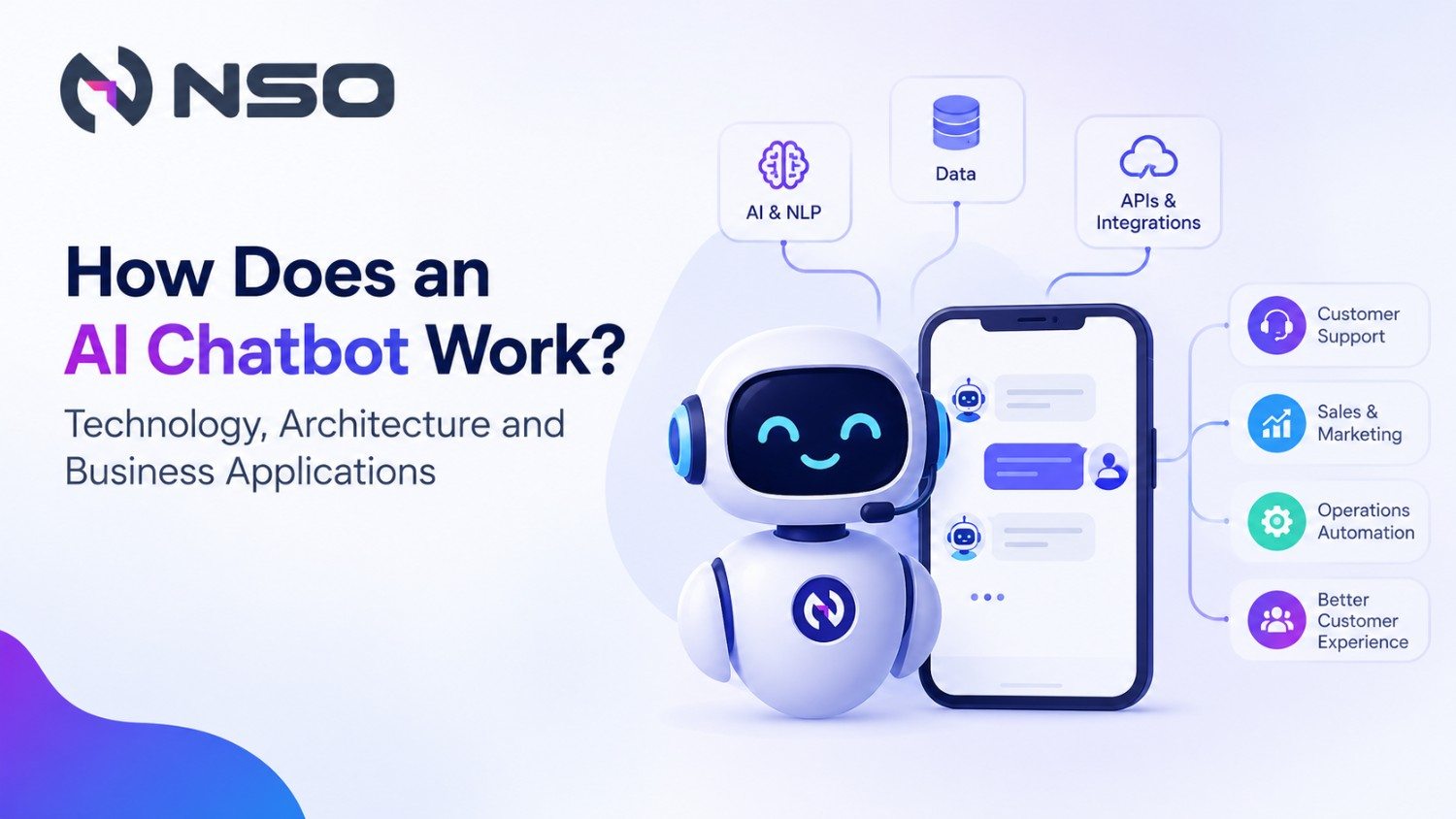
A modern voice assistant typically processes speech through several connected stages. Each stage contributes to understanding, response generation, and spoken delivery.
1. Speech Recognition
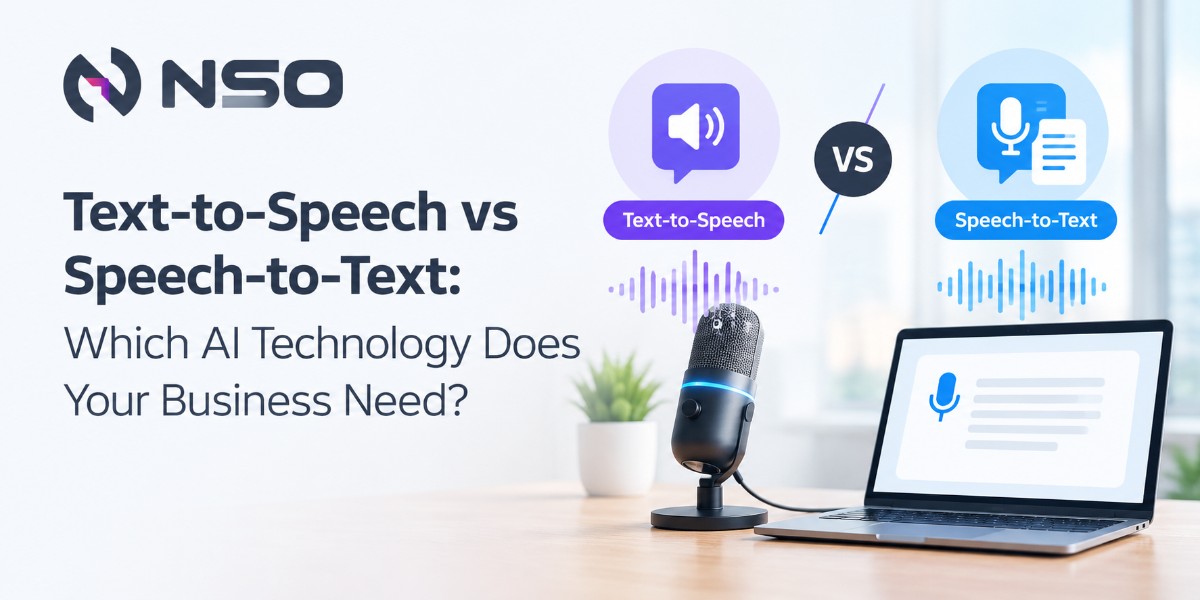
Automatic Speech Recognition (ASR) converts a customer's spoken words into text. Good recognition systems must handle accents, background noise, and different speaking speeds.
2. Language Understanding
Natural Language Processing (NLP) helps identify intent, entities, and conversational context. The system determines whether the customer needs information, support, or a specific action.
3. Context and Knowledge Retrieval
The assistant may retrieve information from approved knowledge bases or business applications. Retrieval helps responses reflect current policies, product details, and customer records.
4. Response Generation
A language model or dialogue engine formulates an appropriate response. Systems may combine generated language with verified information and predefined business rules.
5. Speech Synthesis
Text-to-Speech (TTS) converts the response into spoken audio. Modern synthesis can produce more natural speech, pacing, and pronunciation.
6. Tool Execution and Feedback
Connected systems may allow the assistant to check orders or schedule appointments. The assistant receives the tool's result and communicates the outcome to the customer.
For example, a customer asks to reschedule a service appointment. The assistant checks available slots, confirms the preferred time, and updates the booking. It then communicates the confirmed details.
Core Features of Modern Voice Technology
The best solution depends on business requirements rather than a single feature. These capabilities can improve customer experience and operational performance.
Natural Language Understanding
The system recognises customer intent beyond exact keywords or scripted phrases. This supports more flexible conversations and reduces unnecessary repetition.
Multilingual Communication
Multilingual voice systems can support customers who prefer different languages. Businesses should test regional accents, terminology, and language switching before deployment.
Real-Time Responses
Low-latency processing helps conversations feel more natural and less interrupted. Faster responses are particularly important for customer support and appointment scheduling.
Context Retention
Context management allows the assistant to remember relevant details during a conversation. It can use earlier answers to avoid asking the same questions repeatedly.
CRM and Business System Integration
Integration connects voice interactions with customer records and operational tools. An assistant may create leads, update tickets, or retrieve order information.
Analytics and Conversation Insights
Conversation analytics can reveal common questions, customer concerns, and service bottlenecks. Teams can use these insights to improve workflows and support quality.
Human Handoff
Effective voice systems should recognise situations requiring human intervention. They can transfer conversations with relevant context, reducing the need for customers to repeat information.
Security and Access Controls
Authentication, permission checks, encryption, and audit logs help protect sensitive information. Businesses should also define data retention policies and controls for recording conversations.
The Next Evolution: Agentic AI in Voice
Traditional voice automation usually follows a predefined conversation path. Agentic AI extends this capability by allowing systems to work toward defined goals.
An agentic voice assistant can interpret a request, plan a sequence of steps, and use approved tools. It can adapt when availability changes or an initial action fails. Its decisions should remain within clearly defined business permissions.
Consider a customer who wants to change a delivery address. The assistant verifies identity and checks the order's current status. It then determines whether the change is permitted and submits the request when authorised.
If the order has already shipped, the assistant can explain available alternatives. It may create a support ticket or route the customer to an employee. This approach combines conversational flexibility with controlled task execution.
How Agentic Voice AI Agents Differ From Rule-Based Bots
|
Capability |
Rule-Based Bots |
Agentic Voice AI |
|
Workflow |
Follows predefined paths |
Selects permitted steps toward a goal |
|
Decision-making |
Fixed conditions |
Contextual decisions within constraints |
|
Adaptability |
Limited to configured scenarios |
Can respond to changing circumstances |
|
Tool usage |
Usually predefined actions |
Can select from authorised tools |
|
Multi-step tasks |
Requires explicit scripting |
Can coordinate several approved actions |
|
Oversight |
Rule monitoring |
Permissions, monitoring, evaluations, and escalation |
Agentic systems are not automatically more accurate or safer. Their effectiveness depends on model quality, tool reliability, and appropriate safeguards. Rule-based systems may remain preferable for simple tasks requiring highly predictable outcomes.
The Role of Data in Agentic Voice AI Agents
Data gives voice assistants the context needed to deliver relevant responses and complete tasks. Without reliable information, even a capable model may provide outdated answers or make incorrect decisions.
Businesses should connect assistants to approved, well-maintained information sources. These may include CRM platforms, product catalogues, knowledge bases, booking systems, and customer service records.
Important Data Requirements
- Accuracy: Keep policies, prices, product details, and operational records current.
- Relevance: Retrieve only the information needed for the customer's request.
- Privacy: Protect personal information through appropriate consent and access controls.
- Integration: Connect trusted APIs and systems for real-time information.
- Governance: Maintain audit trails for important decisions and actions.
- Evaluation: Test responses against representative conversations and edge cases.
Businesses should also distinguish between conversation context and long-term memory. Assistants should retain information only when justified by business needs and applicable policies.
For sensitive operations, identity verification must precede access to protected customer records. High-impact actions should require additional checks or explicit human approval.
Top Use Cases for AI Voice Assistants
Voice automation can support multiple departments when integrated with appropriate business systems. The strongest starting points usually involve repetitive conversations and measurable outcomes.
1. Customer Support
Assistants answer common questions about services, policies, orders, and troubleshooting. They can escalate complicated issues to human support teams.
2. Sales and Lead Qualification
Voice systems collect prospect requirements, identify purchase intent, and record lead details. Qualified prospects can then be routed to the relevant sales representative.
3. Appointment Scheduling
An assistant checks available slots and gathers the customer's preferred time. It confirms bookings after receiving the necessary details and authorisation.
4. E-Commerce Assistance
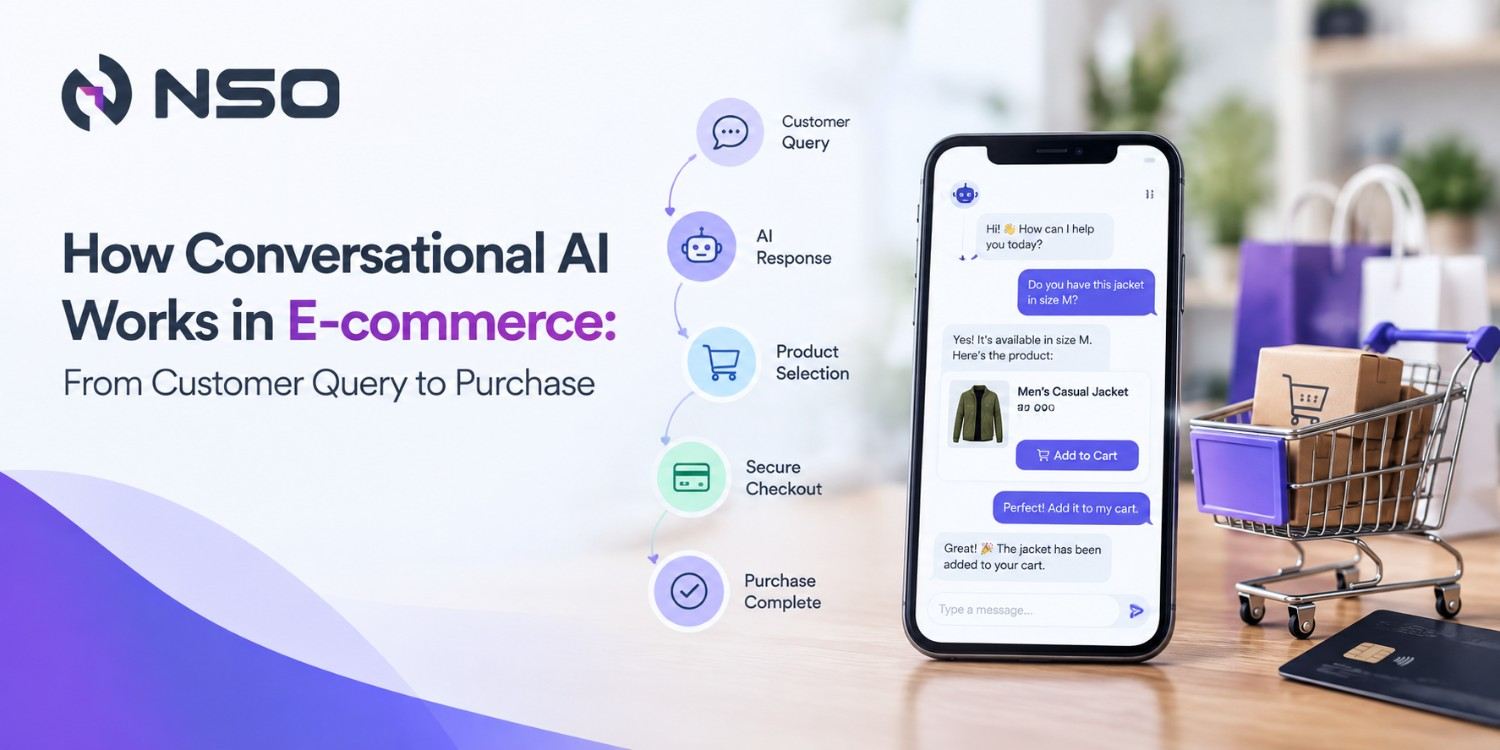
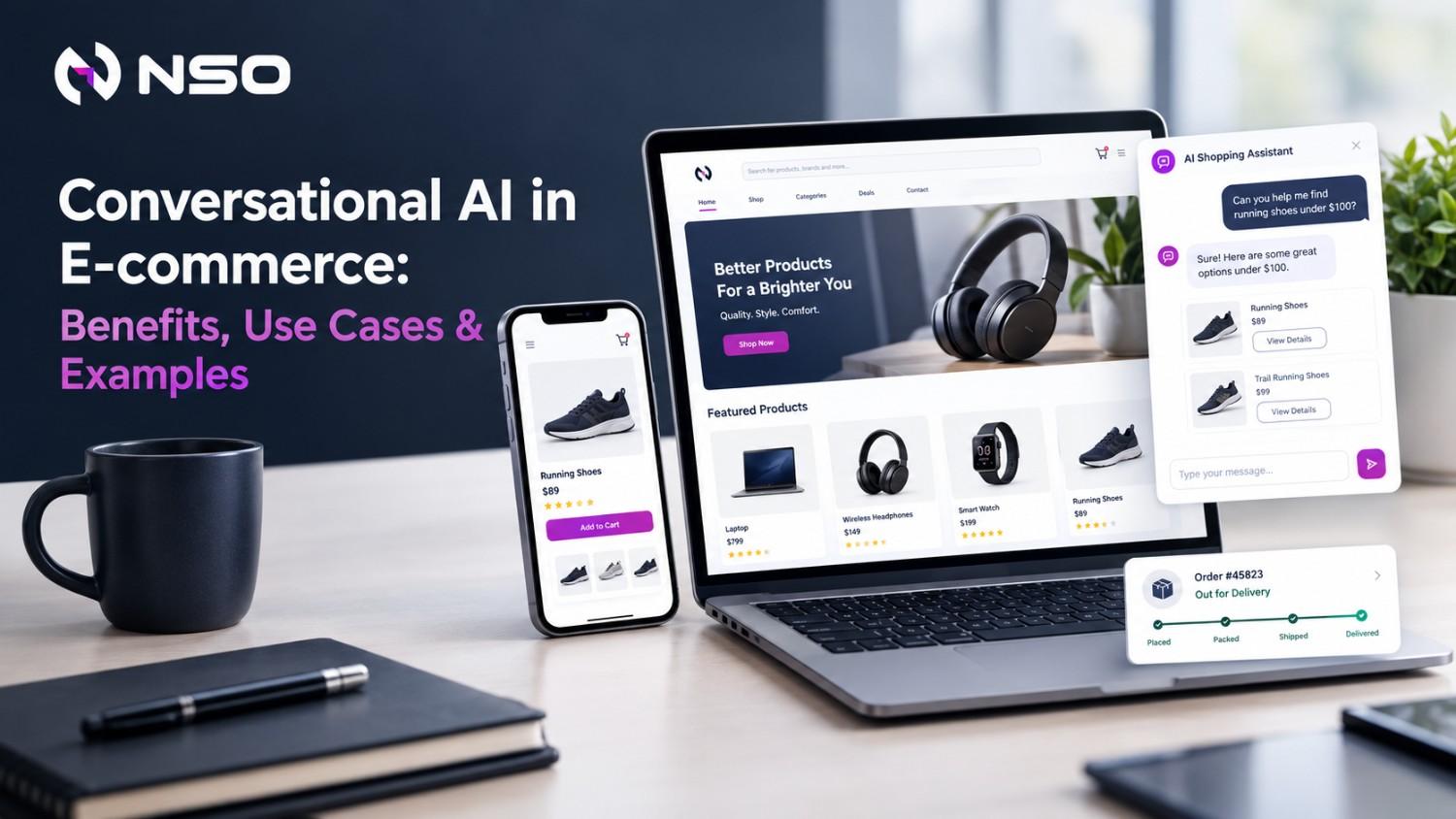
Voice assistants help customers find products, check availability, and understand delivery policies. With secure integrations, they can also provide order updates.
5. Banking and Financial Services
Voice systems can answer general account-service questions and explain standard processes. Sensitive transactions require strong authentication and additional safeguards.
6. Healthcare Administration
Assistants can support appointment enquiries, reminders, and administrative information. They should protect patient data and direct clinical concerns to qualified professionals.
7. Real Estate
Voice agents can capture property requirements, qualify prospective buyers, and arrange site visits. CRM integration helps sales teams follow up with relevant context.
8. Internal Employee Support
Employees can use voice interfaces to find company policies or request routine assistance. Connected workflows may also support IT tickets and HR enquiries.
For example, a real estate business could automate initial lead qualification. The assistant collects location, budget, and property preferences before updating the CRM. Sales representatives can then focus on suitable prospects and scheduled site visits.
How We Build an AI Voice Assistant
Building an effective voice solution begins with a clear business objective. The development process should align technology choices with customer needs, operational requirements, and measurable outcomes.
Step 1: Identify Business Requirements
We define the target users, common queries, expected actions, and success metrics. This helps determine whether scripted automation, conversational AI, or agentic capabilities are appropriate.
Step 2: Design the Conversation Flow
We map common scenarios, follow-up questions, and escalation points. Clear conversation design helps reduce confusion and unnecessary customer effort.
Step 3: Select the Technology Stack
We evaluate speech recognition, language models, speech synthesis, hosting, and real-time communication requirements. The selected stack should balance response quality, latency, security, and cost.
Step 4: Integrate Business Systems
We connect approved APIs, CRM platforms, knowledge bases, and operational applications. Integrations enable the assistant to retrieve current information and perform authorised actions.
Step 5: Implement Security and Guardrails
We configure authentication, role-based permissions, data protection, and action validation. Sensitive tasks may require confirmation, human approval, or additional verification.
Step 6: Test Real-World Conversations
We evaluate accents, background noise, interruptions, ambiguous requests, and unexpected responses. Testing should include failure scenarios and attempts to trigger unauthorised actions.
Step 7: Deploy and Optimise
We launch through a controlled rollout and monitor performance continuously. Conversation analytics and user feedback help identify improvements over time.
Useful metrics include task completion rate, response latency, successful transfers, customer satisfaction, and cost per interaction. Businesses should establish baselines before deployment and review results regularly.
Conclusion
AI voice assistants are evolving from simple conversational interfaces into systems that can support complete business workflows. Agentic AI expands these possibilities, provided organisations prioritise reliable data, security, and human oversight.
Nova Strategic Operations helps businesses develop customised AI solutions aligned with their operational goals. Our team can support voice assistant development, conversational AI integration, workflow automation, and connections with existing business systems.
We focus on practical implementation, secure integrations, and scalable architectures that support business growth. Ready to modernise your customer conversations? Contact Us to discuss your AI voice assistant requirements.
Frequently Asked Questions
1. What is an AI voice assistant used for?
An AI voice assistant handles spoken customer interactions, answers questions, and supports routine tasks. Depending on its integrations, it can qualify leads, schedule appointments, retrieve order information, and update business systems.
2. How is an AI voice assistant different from IVR?
Traditional IVR typically guides callers through predefined menus and options. An AI voice assistant can interpret natural speech, understand varied requests, and provide contextual responses through connected systems.
3. What is the difference between conversational AI and agentic voice AI?
Conversational AI focuses primarily on understanding and responding to users. Agentic voice AI can also plan permitted steps, use tools, and execute multi-step workflows toward defined objectives.
4. How can businesses choose the best AI voice assistant?
Businesses should evaluate language support, response quality, integration options, security, latency, and operating costs. The best AI voice assistant is the one that meets specific business requirements and performs reliably in real-world conversations.
5. Is agentic AI safe for customer-facing voice applications?
Agentic AI can be deployed responsibly with authentication, limited permissions, monitoring, and clear escalation rules. Sensitive actions should use appropriate verification, and businesses should test systems before allowing access to production workflows.