

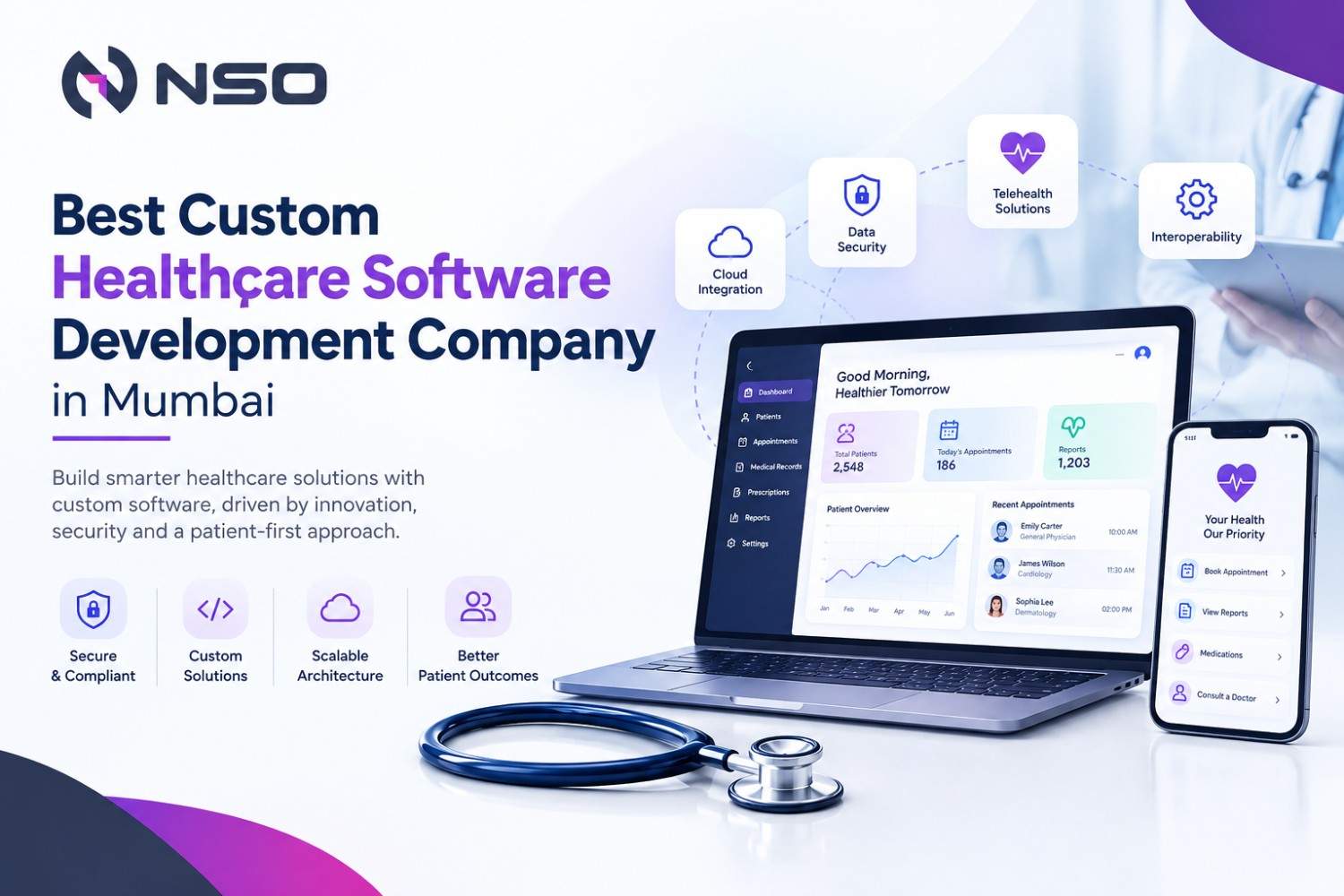

What if your healthcare software could do more than store patient records, it could actually help doctors make faster decisions, improve patient experiences, and reduce operational workload? That is the shift happening across modern healthcare.
Hospitals, clinics, diagnostic centers, health-tech startups, and medical organizations are moving beyond generic platforms toward purpose-built digital solutions designed around their workflows.
Choosing the right healthcare software development company can help organizations turn complex healthcare processes into connected, secure, and scalable digital experiences.
Why Custom Healthcare Software Important for Modern Healthcare
Healthcare organizations rarely operate with one simple workflow. A hospital may need separate systems for appointments, patient registration, billing, pharmacy, laboratory operations, clinical documentation, and insurance processing.
Off-the-shelf software can address basic requirements, but it may not adapt well to unique operational processes. Custom development allows healthcare organizations to design software around their actual requirements instead of forcing employees to change established workflows.
A well-designed healthcare platform can help:
- Reduce repetitive administrative tasks
- Improve patient data accessibility
- Connect different healthcare departments
- Support faster communication between healthcare teams
- Improve appointment and resource management
- Enable data-driven decision-making
- Create better digital experiences for patients
- Support future integrations and technology upgrades
The objective is not simply to digitize existing processes. It is to create a technology ecosystem that makes healthcare operations more connected and efficient.
What Is Custom Healthcare Software Development?
Custom healthcare software development involves creating software specifically for the operational, clinical, administrative, and business requirements of a healthcare organization.
Instead of offering a fixed set of features, custom healthcare software development services can be designed around specific workflows, user roles, integrations, compliance requirements, and scalability goals.
For example, a multi-specialty hospital may require a centralized platform connecting:
Patient → Appointment → Doctor → Diagnosis → Laboratory → Pharmacy → Billing → Follow-up
Connecting these stages can reduce information silos and provide authorized users with access to relevant information at the right time.
Healthcare Software Solutions Businesses Can Build
A healthcare organization can develop different types of custom platforms depending on its business model and target users.
1. Hospital Management Software
Hospital management platforms can centralize administrative and clinical operations, including:
- Patient registration
- Appointment scheduling
- Doctor management
- Bed management
- Billing
- Pharmacy operations
- Laboratory workflows
- Staff management
- Reporting and analytics
This gives hospital administrators a unified view of daily operations.
2. Electronic Health Record Systems
EHR solutions can help authorized healthcare professionals securely manage patient information, medical histories, prescriptions, diagnoses, reports, and clinical documentation.
A custom EHR platform can also be designed to integrate with other healthcare applications, helping reduce duplicate data entry.
3. Telemedicine Platforms
Telemedicine software can enable patients to consult healthcare professionals remotely through video consultations, secure messaging, appointment scheduling, digital prescriptions, and online payments.
For healthcare providers serving patients across different locations, telemedicine can become an important extension of their physical services.
4. Patient Engagement Applications
Mobile and web applications can help patients manage appointments, access reports, receive reminders, communicate with healthcare providers, and monitor healthcare-related information.
Personalized patient portals can also improve communication beyond the traditional hospital visit.
5. Healthcare Analytics Platforms
Healthcare generates large volumes of operational and clinical data. Analytics platforms can transform this data into useful insights.
For example, dashboards can help management monitor:
- Patient volumes
- Appointment trends
- Department performance
- Revenue indicators
- Resource utilization
- Operational bottlenecks
With appropriate data infrastructure, advanced analytics and AI can further support forecasting and decision-making.
Features of Custom Healthcare Software
The right features depend on the healthcare organization's requirements. However, several capabilities are commonly important.
Secure User Management: Role-based access ensures administrators, doctors, nurses, patients, laboratory staff, and billing teams can access only relevant information.
Appointment Management: Automated scheduling, reminders, cancellations, rescheduling, and availability management simplify appointment workflows.
Digital Patient Records: Centralized patient records enable authorized professionals to quickly access accurate and relevant information.
Integration Capabilities: APIs connect healthcare software with laboratory systems, payment gateways, medical devices, pharmacies, CRM platforms, and other applications.
Reporting and Analytics: Real-time dashboards provide actionable insights into operational performance, trends, and areas requiring attention.
Mobile Accessibility: Mobile-friendly platforms enable healthcare professionals and patients to conveniently access essential services through smartphones and tablets.
How AI Is Transforming Healthcare Software
AI is adding another layer of intelligence to healthcare applications.
A modern platform can incorporate AI capabilities such as:
- Conversational healthcare assistants
- Automated appointment support
- Medical document processing
- Patient query classification
- Predictive analytics
- Intelligent search
- Voice-based interactions
- Automated administrative workflows
For example, an AI assistant could handle routine appointment questions while transferring complex or sensitive cases to appropriate staff.
AI should complement healthcare professionals rather than replace clinical judgment. Proper validation, privacy controls, human oversight, and responsible implementation are essential when introducing AI into healthcare workflows.
Why Choose a Healthcare Software Development Company in Mumbai?
Mumbai has a strong technology and business ecosystem, making it an important destination for organizations seeking software development expertise.
Working with a Healthcare software development company in Mumbai can provide businesses with access to software engineering, UI/UX, cloud, AI, API integration, and product development capabilities under one development ecosystem.
For organizations operating in India, local collaboration can also make communication, requirement gathering, project coordination, and ongoing support more convenient.
However, location alone should not determine your technology partner. Businesses should evaluate technical expertise, healthcare-domain understanding, security practices, integration capabilities, development methodology, scalability, and post-launch support.
Examples of Custom Healthcare Software Use Cases
Custom platforms can support a wide range of healthcare scenarios.
- Multi-specialty hospitals: Centralized hospital management, EHR, appointment scheduling, billing, and analytics.
- Diagnostic centers: Online booking, laboratory workflow management, report delivery, and patient notifications.
- Healthcare startups: Telemedicine applications, digital health platforms, AI assistants, and patient engagement solutions.
- Clinics: Doctor scheduling, digital records, appointment management, patient communication, and billing.
- Pharmacy businesses: Inventory management, prescription processing, order management, and customer applications.
These examples demonstrate why healthcare organizations often benefit from software designed around their specific operating model.
Frequently Asked Questions
1. What does a custom healthcare software development company do?
A custom healthcare software development company designs and develops healthcare applications based on an organization's specific workflows, users, integrations, security requirements, and business objectives.
2. What types of healthcare software can be developed?
Businesses can develop hospital management systems, EHR platforms, telemedicine applications, patient portals, healthcare mobile apps, appointment systems, laboratory management software, analytics platforms, and AI-powered healthcare solutions.
3. How long does custom healthcare software development take?
The timeline depends on factors such as project complexity, number of features, integrations, user roles, security requirements, platform selection, and testing. A smaller application may require significantly less development time than an enterprise healthcare ecosystem.
4. Can healthcare software integrate with existing systems?
Yes. Custom platforms can be designed with APIs and integration layers to connect with existing healthcare applications, payment systems, laboratory systems, CRM platforms, cloud services, and other third-party technologies.
5. Why should healthcare businesses consider custom software?
Custom software gives healthcare organizations greater control over functionality, workflows, integrations, user experience, scalability, and future technology upgrades compared with relying entirely on generic software.
Conclusion
Healthcare is becoming more digital, and organizations need software that is secure, easy to use, connects with existing systems, and can grow with their needs. This is where custom healthcare software development services can help.
Nova Strategic Operations develops custom healthcare solutions, including patient apps, hospital management software, AI automation, analytics, and cloud-based platforms.
If you want to modernize healthcare operations or build a digital health product, an experienced Healthcare software development company in Mumbai can help you create a secure and scalable solution.
Ready to build a smarter healthcare solution? Contact us today.



.png)



.png)

.png)
.png)
.png)
_(1).png)
.png)